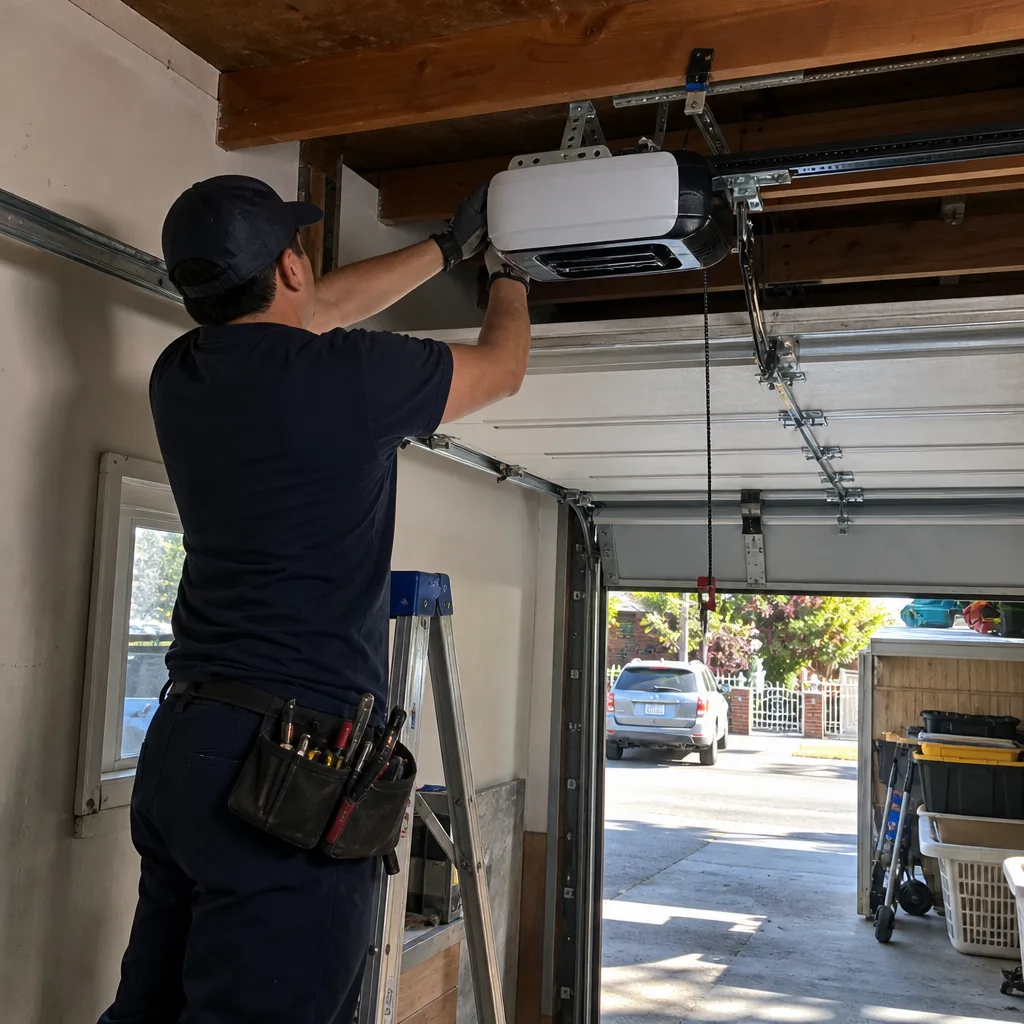
Last updated November 21, 2026
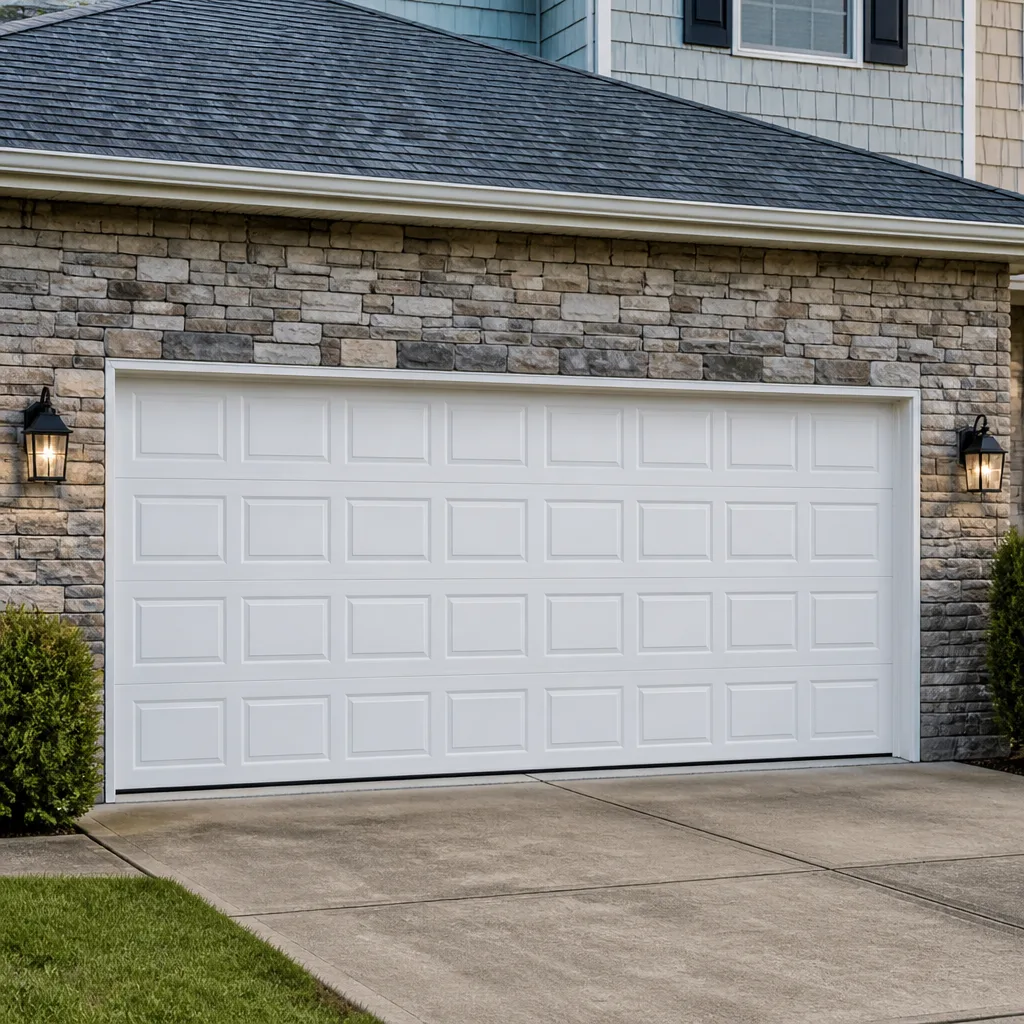 Raised-panel steel
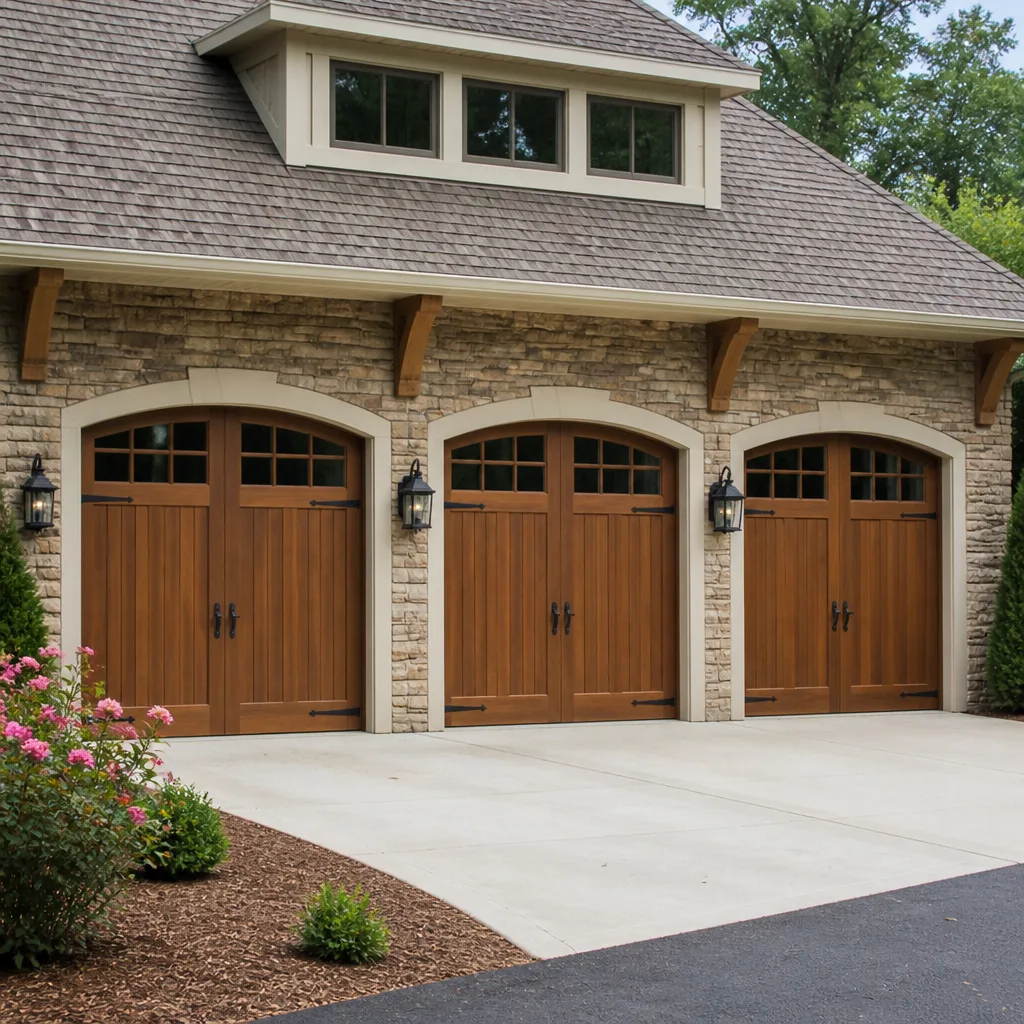 Carriage house
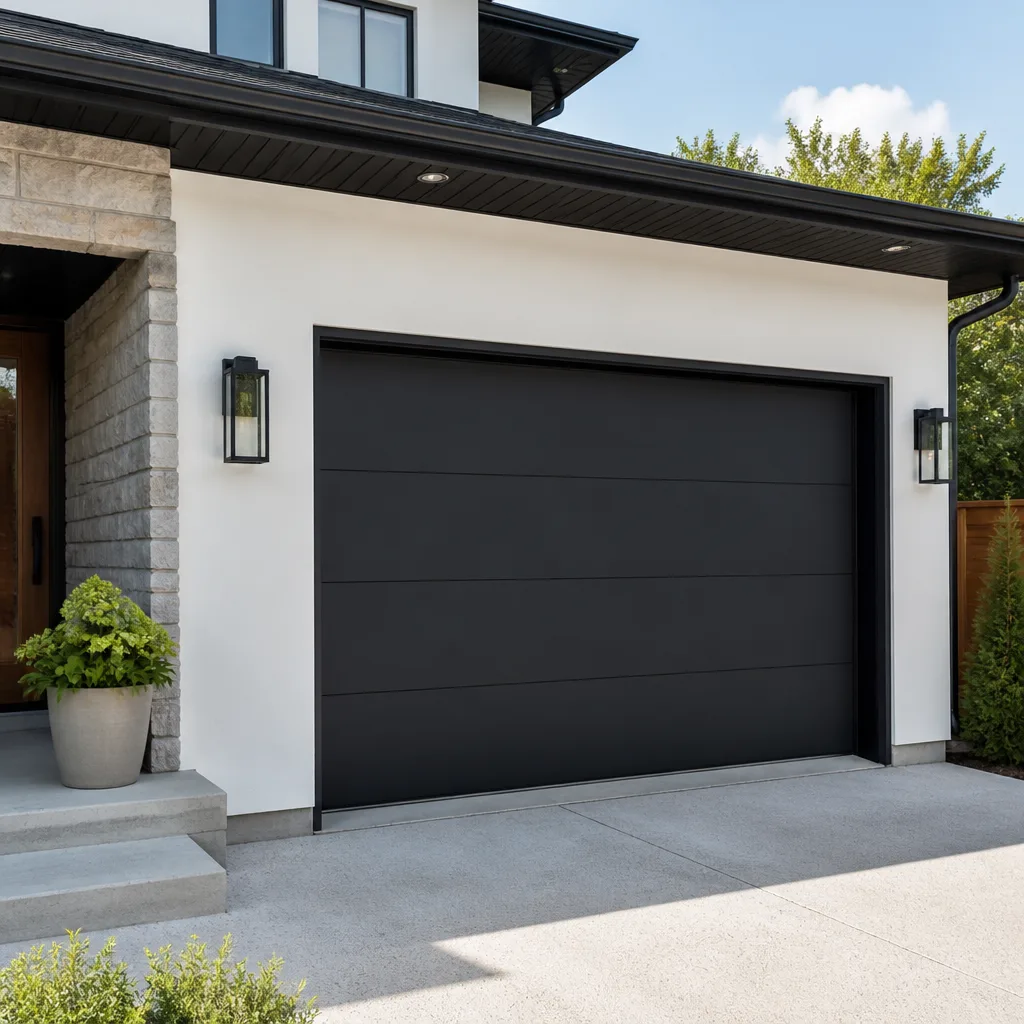 Modern flush
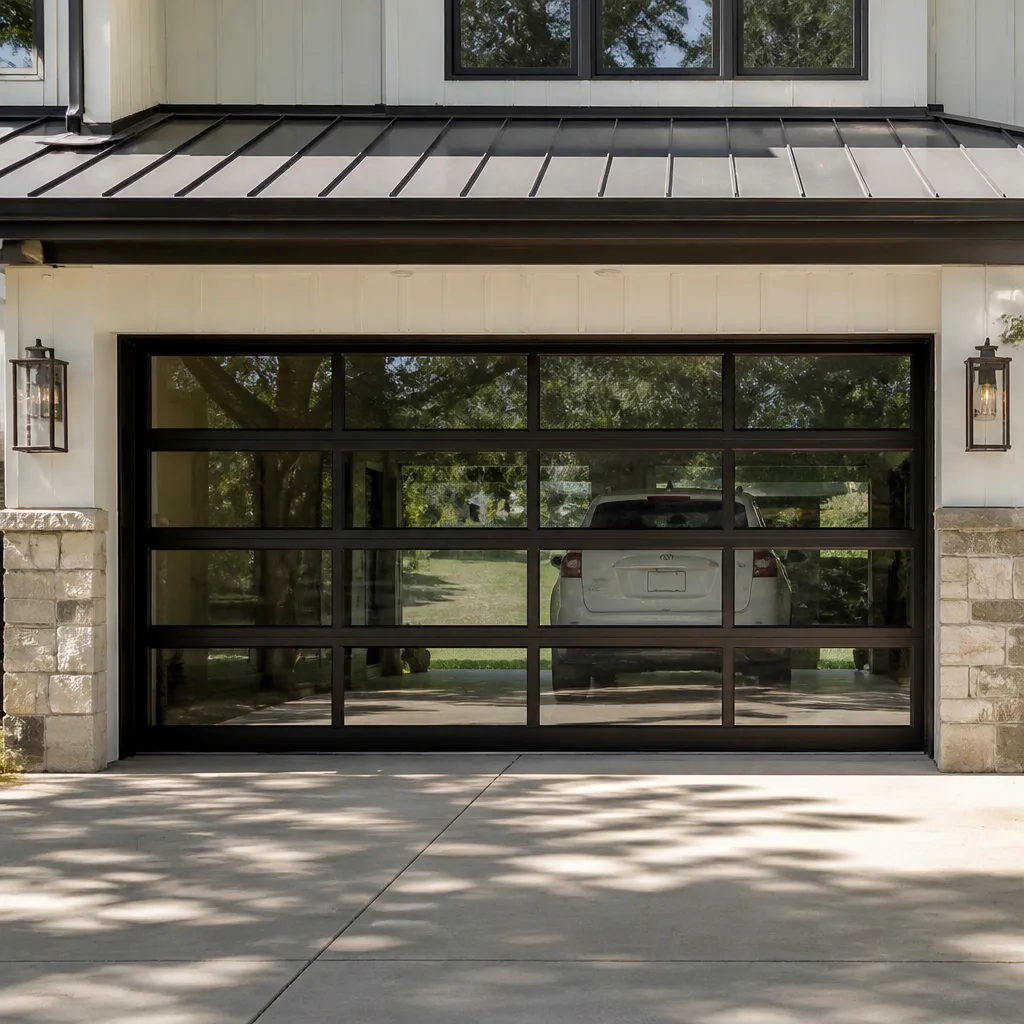 Full-view glass
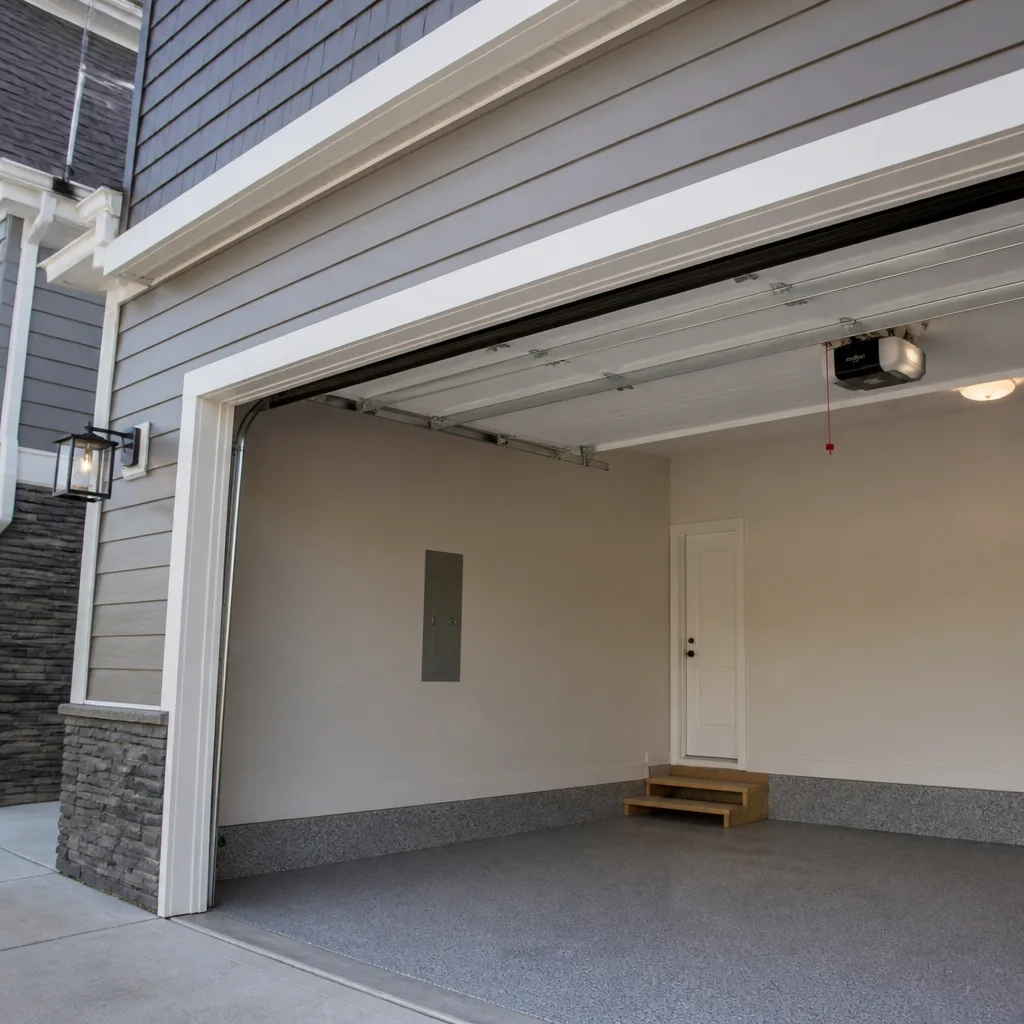 LiftMaster openers
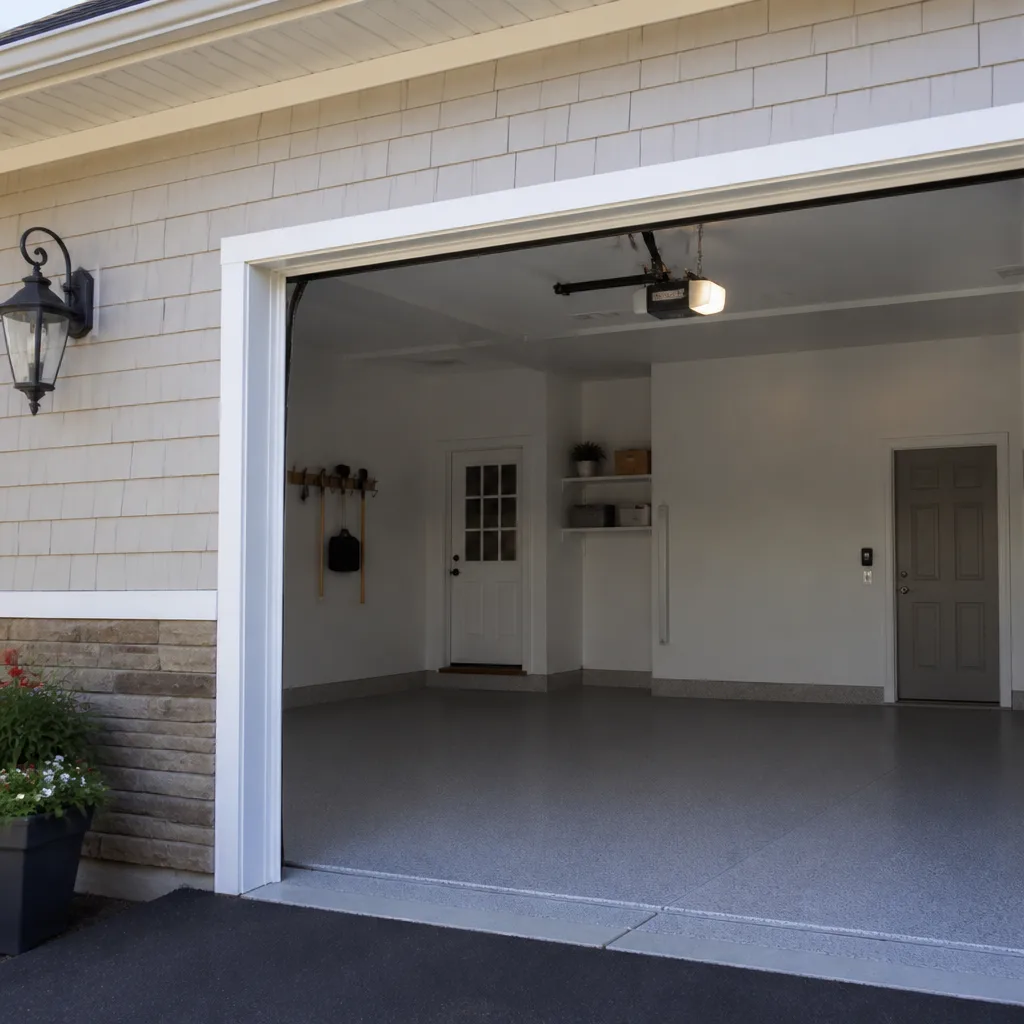 Chamberlain openers
Full 25-point door and opener safety check with every visit - springs, cables, rollers, tracks, and your LiftMaster or Chamberlain opener included
You get a price before we start. It does not change when the pro arrives.
Get your free estimateThe Complete Guide to Garage Doors in Corona
Most garage door guides are written for suburban ranch homes in Arizona. If your garage is attached to a two-family in Corona, half that advice will steer you wrong. Standard suburban guidance assumes a wide driveway, a deep setback, a single-family footprint, and a climate with no real winter and almost no humidity. None of that describes Corona, Queens. Here the lots are narrow, the garages are often tucked under or beside living space in a two-family or rowhouse, the humidity sits heavy through summer, and the winters are cold enough to matter. This guide maps every real decision – door width, clearance, opener placement, spring type, panel style, insulation – to the conditions you actually live with in Corona.
Quick Answer
A garage door in Corona needs to fit a tight urban footprint, resist humidity-driven rust, and insulate for a real Northeast winter – so the right choices are narrower width and tighter clearance for attached garages, galvanized or otherwise corrosion-resistant torsion springs, a properly sized opener placed where the ceiling allows, and a modest but real insulation R-value matched to New York winters rather than national averages. Material, panel style, and spring system should each be chosen for a dense Queens block, not a suburban lot. The rest of this guide breaks down each decision.
Styles & brands we work with
- Raised-panel steel
- Carriage house
- Modern flush
- Full-view glass
- LiftMaster openers
- Chamberlain openers
Table of Contents
- How Corona’s Density Changes Door Sizing and Clearance
- Humidity and Your Springs: What Accelerates Rust
- Choosing Materials for a Queens Climate
- Panel Styles That Fit Local Aesthetic Norms
- Attached vs. Detached Garages in Rowhouses and Two-Families
- Matching Insulation to Actual NYC Winters
- Opener Types for Tight or Unusual Garage Layouts
- Repair, Spring Service, and Installation in Corona
How Corona’s Density Changes Door Sizing and Clearance
Density is the first thing that separates a Corona garage from a suburban one. On a narrow lot, the garage is often single-car width squeezed beside or beneath the house, and the driveway leaves little room to maneuver. That changes the practical size of the door and the clearances around it. A door that would be a standard single-car width in a suburban development can feel tight here, and the space in front of it matters as much as the opening itself.
Three measurements matter more in Corona than in most markets:
- Opening width and height. Narrow lots often mean single-car openings that are close to the minimum usable width. Confirm the exact rough opening before ordering anything, because a door that’s an inch too wide won’t fit a tight rowhouse frame.
- Headroom. A garage tucked under living space may have a low ceiling, which limits how a torsion or extension spring system and the opener rail can sit. Low-headroom hardware exists for exactly this, but it has to be specified from the start.
- Driveway depth and approach. When the driveway is short or the door opens close to the sidewalk, a door that rolls up on tight clearance can be a better fit than one that swings out on a track that needs more room behind it.
Clearance also affects the opener. An opener that mounts to the ceiling needs enough overhead room to hang its rail, and on a compact block that space isn’t always available in the usual way. When it isn’t, a wall-mount or jackshaft-style opener that mounts beside the door rather than overhead is often the right answer. We check these measurements before recommending hardware so the door and opener work together in the space you actually have, not the space a national guide assumes.
Humidity and Your Springs: What Accelerates Rust
Corona sits close to Flushing Meadows, and the summer humidity that settles over this part of Queens is real. For a garage door, the component that suffers most from that moisture is the torsion spring. Springs are steel under constant tension, and steel plus moisture plus time equals rust. Rust on a spring isn’t just cosmetic. It weakens the metal, changes how the spring behaves under load, and raises the odds of a break. High-tension torsion springs are also the most dangerous part of the whole system; a trained professional should handle any spring work, and we strongly advise against adjusting or replacing one yourself.
Material choice is your defense against humidity:
- Galvanized steel springs and hardware. A zinc coating resists surface rust longer than bare steel in humid air. Ask specifically what coating the spring and end hardware carry.
- Stainless or coated fasteners. Small parts rust first. Hinges, brackets, and bolts that resist corrosion keep the whole assembly moving smoothly.
- Regular lubrication. A light application of proper garage door lubricant on springs, hinges, rollers, and tracks pushes moisture off bare metal and slows rust. It’s the cheapest humidity defense there is.
In dense Corona blocks, garages are also often closed up and shaded, which holds moisture rather than letting it dry out the way an open suburban lot does. Combined with the nearness of Flushing Meadows and the summer air, that means a spring that might last years in a dry climate deserves a closer look here. When a spring does fail, spring repair done right – matched to the door’s weight and balanced properly – is a job for someone who works on springs every day, which is why it’s a dedicated part of what we do.
Choosing Materials for a Queens Climate
The right door material for Corona balances a real winter, steady humidity, and the wear of a dense block. Steel is the most common choice, and for good reason. It’s strong, it insulates well when it carries a core, and it holds up against the cold snaps and humid summers of Queens better than wood does. Clopay and Amarr, two of the brands we routinely work with, make steel doors across a wide range of styles and insulation levels, so a homeowner isn’t forced into one look to get durability.
Here’s how the main materials stack up for this climate:
- Insulated steel. The practical default. It resists humidity, holds its shape through cold, and comes in panel styles that fit an urban block. Rust can still start at the bottom edge where moisture collects, so a coating and a well-sealed bottom help.
- Aluminum. Lighter and rust-resistant, good for tight openings and low-weight needs, but less insulating on its own. A smart pick for a compact door where the opener has a light load.
- Wood. Warm and handsome, but in Queens humidity wood swells, warps, and needs regular refinishing. It can work for a covered, protected garage but asks more upkeep here than in a dry climate.
- Fiberglass and composite. Resist moisture well and won’t rust, with a look that can mimic wood. A reasonable option where you want the wood aesthetic without the yearly maintenance.
The climate detail that matters most: this is a four-season market, not a mild one. Doors here see freezing winters and humid summers in the same year, so the material has to handle both. A door built for a warm, dry climate may rust or warp faster than the marketing suggests. If you’re weighing a replacement, our garage door installation team can help you match material and insulation to how your specific garage sits on its lot.
Panel Styles That Fit Local Aesthetic Norms
Panel style is more than looks in Corona. On a dense block of two-families and rowhouses, your door is part of a streetscape, and certain styles sit more easily in it than others. A door that fights the block’s look can draw attention you don’t want, and if you have an HOA or co-op board, it can draw a rule you didn’t plan for. The goal is a style that reads as consistent with the homes around it while still giving you the durability and insulation the climate demands.
A few style notes for a Corona setting:
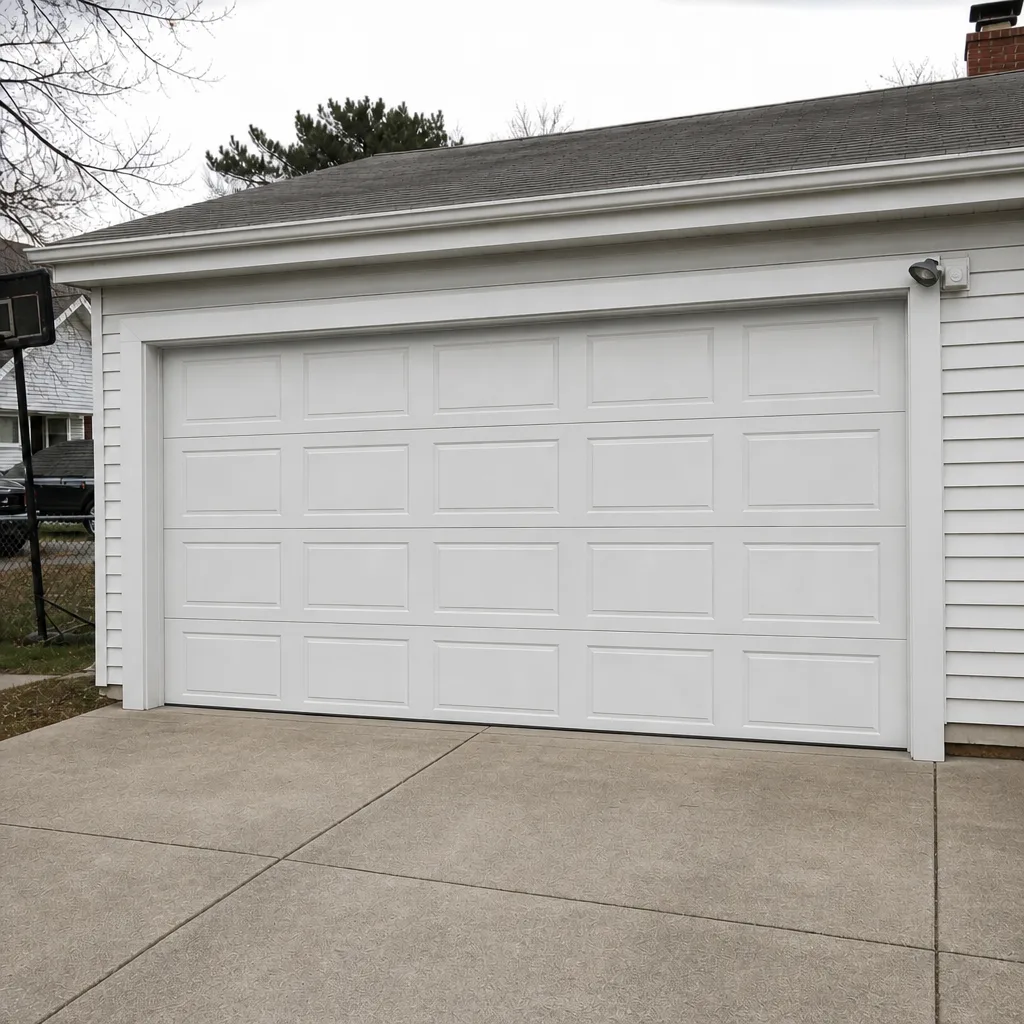
- Traditional raised-panel. The safest choice. It matches the look of most Queens residential blocks and rarely raises a board objection. Available across the major steel brands.
- Carriage-house style. Attractive, but it reads as a higher-end suburban look and may not fit every block. Check any HOA or co-op rules before committing.
- Flush or contemporary panels. Clean and simple. They can suit newer construction, but on an older rowhouse block a traditional panel often blends better.
Color matters as much as panel. In Corona, neutral tones – white, almond, and similar – tend to sit comfortably against brick, siding, and stucco facades. A bold color can look great on a standalone home but stand out on a tight block. If a co-op board or HOA has a say, get the approval in writing before the order goes in, because a door that’s manufactured and delivered can’t be returned as easily as a paint sample. We’ve seen enough Corona installs to tell you which styles raise eyebrows and which quietly fit, and we’ll say so before you order.
Attached vs. Detached Garages in Rowhouses and Two-Families
In Corona, whether your garage is attached or detached changes almost every decision. This is the single biggest way Queens housing stock differs from the suburban ranch homes most guides assume. On a rowhouse or two-family, the garage is typically attached to or built into the house – often on the ground floor beside or beneath living space – and that attached relationship drives insulation, safety, and code considerations that a detached garage simply doesn’t have.
Attached garages share a wall or ceiling with living space. That means:
- Insulation does double duty. A poorly insulated attached garage door lets cold bleed into adjacent rooms. Here, insulation isn’t a comfort extra; it protects the house.
- Opener and door hardware placement matters. On a compact attached footprint, the opener and rails have to sit without intruding on headroom you may need for storage or access.
- Air sealing and weatherstripping are important. Gaps around an attached door let cold air, moisture, and in some cases exhaust fumes move toward the house. Good sealing protects both comfort and safety.
Detached garages – where they exist behind a home – are freer. Insulation is more about comfort and protecting the door itself than protecting living space, and clearance options widen. But detached garages on a Corona block can be exposed to more weather and less regular attention.
Either way, one note for two-family setups: the garage may serve one unit and be accessed by tenants or a neighbor, so confirm who controls access before any service call or installation. That’s a small logistics point that saves confusion in Corona’s shared-housing layouts.
Matching Insulation to Actual NYC Winters
Insulation R-value is where national averages mislead Corona homeowners most. A guide written for a mild climate will tell you insulation is optional, and a guide written for a severe climate will push the highest R-value as if it’s always worth it. Neither fits Queens. This is a genuine four-season market with real winter cold, but it’s a dense urban setting where a lot of garages are attached and a modest R-value does a lot of work because the space behind the door matters.
The practical way to think about insulation here:
- Match the R-value to the winter, not to a national average. Choose an insulation level that addresses real Northeast cold rather than a warm-climate number that undersells the need or a severe-climate number that overspends.
- Prioritize the attached garage. If the garage shares a wall or ceiling with living space, insulation protects your home’s comfort and energy use. That’s the strongest reason to insulate in Corona.
- Weigh the door’s own protection. An insulated door is also stiffer and quieter, which helps on tight blocks where the door operates close to living space.
- Consider how much time you spend in the garage. If the garage is a workspace or an entry you use daily, insulation earns its cost even with an attached setting.
We don’t publish a single “right” R-value for Corona, because the right number depends on whether your garage is attached, how much of it touches living space, and how you use it. Ask the question as “what protects my Queens winter,” not “what’s the national recommended value.” Understand the difference, and you’ll spend your money where it actually changes how your garage performs.
Opener Types for Tight or Unusual Garage Layouts
An opener has to work with the door and the ceiling you have, and in Corona that ceiling is often tighter than a suburban guide imagines. The classic ceiling-mounted chain or belt drive needs enough overhead room to hang its rail, and a low-headroom garage under living space may not offer it. The good news is that the major brands – Chamberlain, Genie, and others – make a range of opener types, and the right one is a fit question, not a brand question.
How the main types suit a Corona garage:
- Belt drive. Quiet and smooth, a good fit when the garage sits close to living space. Needs overhead room for the rail.
- Chain drive. Proven and durable, a bit noisier, also needs overhead room.
- Jackshaft or wall-mount. Mounts beside the door instead of overhead, which saves headroom in the low-ceiling garages common in tight two-family footprints. Great for unusual layouts.
Opener placement also depends on where the door tracks run and where power is available. In a compact Corona garage, a wall-mount opener can free up space that a ceiling rail would consume. And because we work on the brand already in your garage – LiftMaster, Chamberlain, Genie, Clopay, Amarr, Wayne Dalton, Craftsman, Raynor – an opener diagnosis or garage door opener repair doesn’t depend on you knowing which make and model you have. We recognize the hardware and get to the fix.
Repair, Spring Service, and Installation in Corona
A garage door failure usually lands in one of three buckets: something on the door itself breaks, the opener stops responding, or the spring fails. Each has its own path. Most routine garage door repair is a same-day matter, and emergency service covers the situations where a door that won’t close is a security or access problem rather than an inconvenience. Spring repair is its own specialty, and installation is a measured, ordered job – not something to rush.
Here’s how the service paths differ, so you know what to expect:
- Something on the door breaks. A bent track, a jammed hinge, a misaligned panel, a door that won’t close straight. A technician can usually assess it and get it working the same day.
- The opener stops responding. Dead opener, no response from the remote, a motor that runs but doesn’t move the door. Opener repairwork spans the major brands and often resolves same-day.
- The spring fails. A broken spring can leave the door too heavy to lift safely. Spring repair should be handled by a professional – this is the high-stakes repair where DIY is genuinely dangerous.
- A new door is needed. Installation is measured, ordered, and scheduled. There’s no same-day promise on a new door, because the door has to be the right size and material first.
That last point matters. If you call about a replacement, we measure and confirm fit, style, and insulation, then order and schedule – a free measure and a written price, not a same-day dispatch. Anything is quoted and agreed before work starts, so the number you approve is the price. If it’s urgent, emergency service exists for the situations that can’t wait.
Common Mistakes to Avoid
- Ordering a door by national size, not by your Corona opening. A rowhouse frame often needs an exact measurement. Measure the rough opening, not just the old door, or you may get a door that’s an inch off.
- Treating Flushing Meadows humidity as harmless. Bare steel springs rust faster in this humid part of Queens. Ask about coating and keep the hardware lubricated.
- Copying a suburban door style onto a close block. A look that’s fine on a wide lot can clash on a tight row. Check any HOA or co-op rules before ordering.
- Ignoring whether the garage is attached. An attached garage needs insulation and air sealing to protect living space; a detached one has more slack. Don’t apply detached advice to an attached footprint.
- Applying a national R-value. Match insulation to a real NYC winter and to your specific garage, not to a national average that fits a different climate.
- Attempting spring work yourself. High-tension torsion springs can cause serious injury. Leave spring repair to a trained professional.
- Choosing an opener before checking headroom. On a low-ceiling Corona garage, a wall-mount opener can be the only sensible fit. Confirm clearance first, then choose hardware.
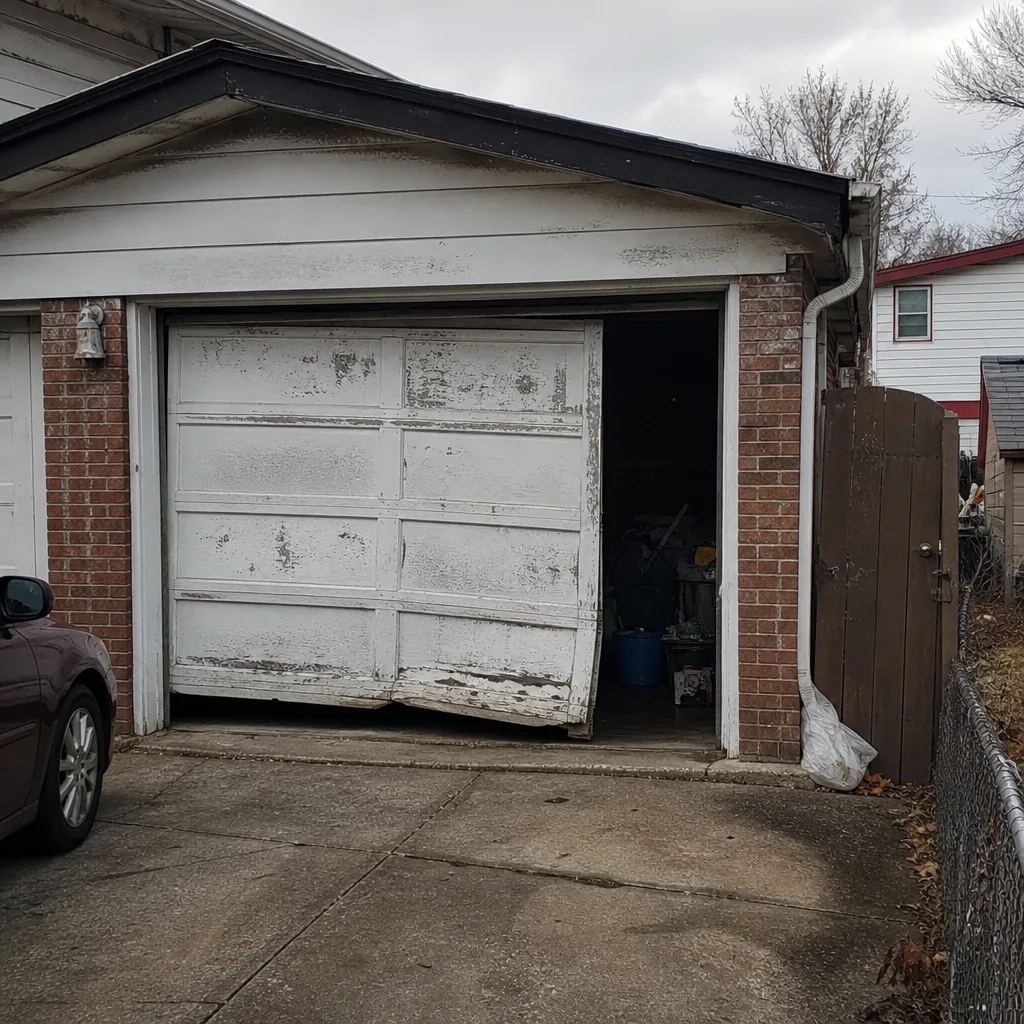
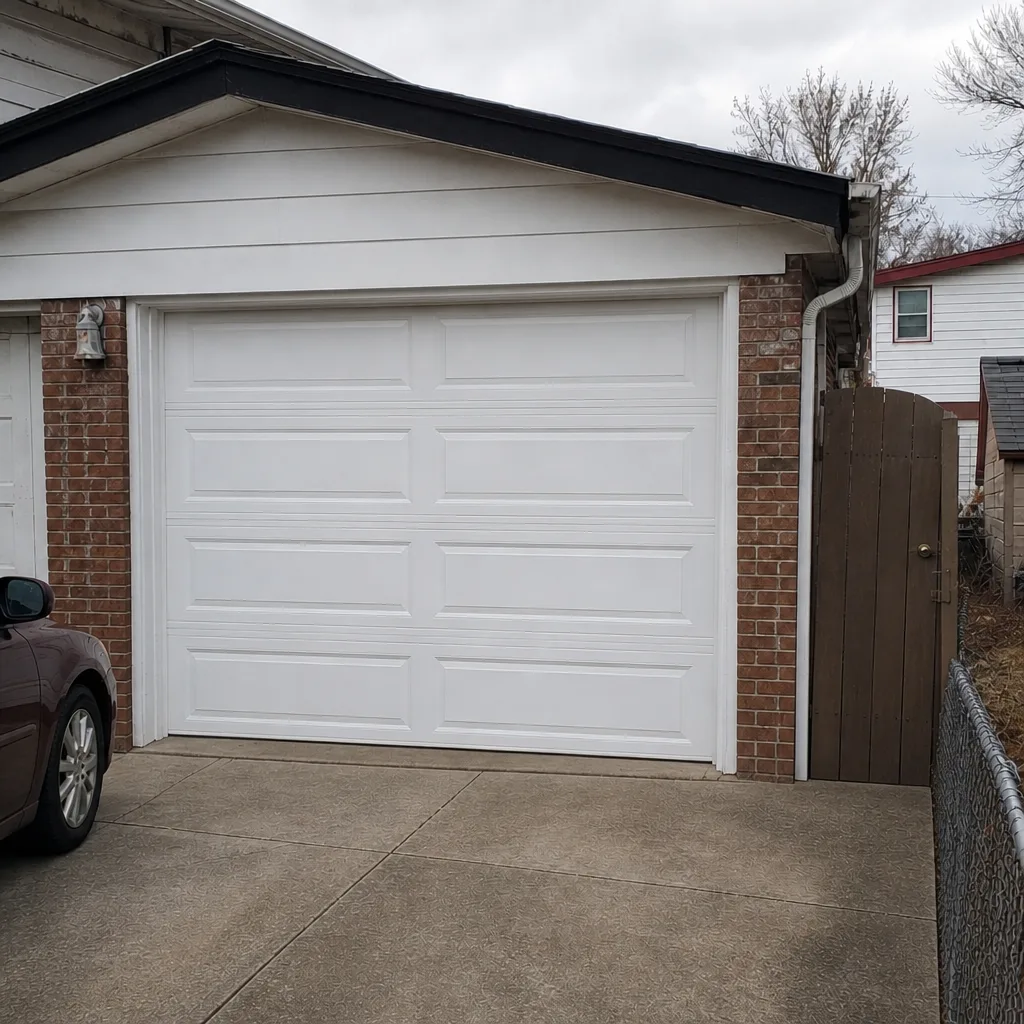
See the difference
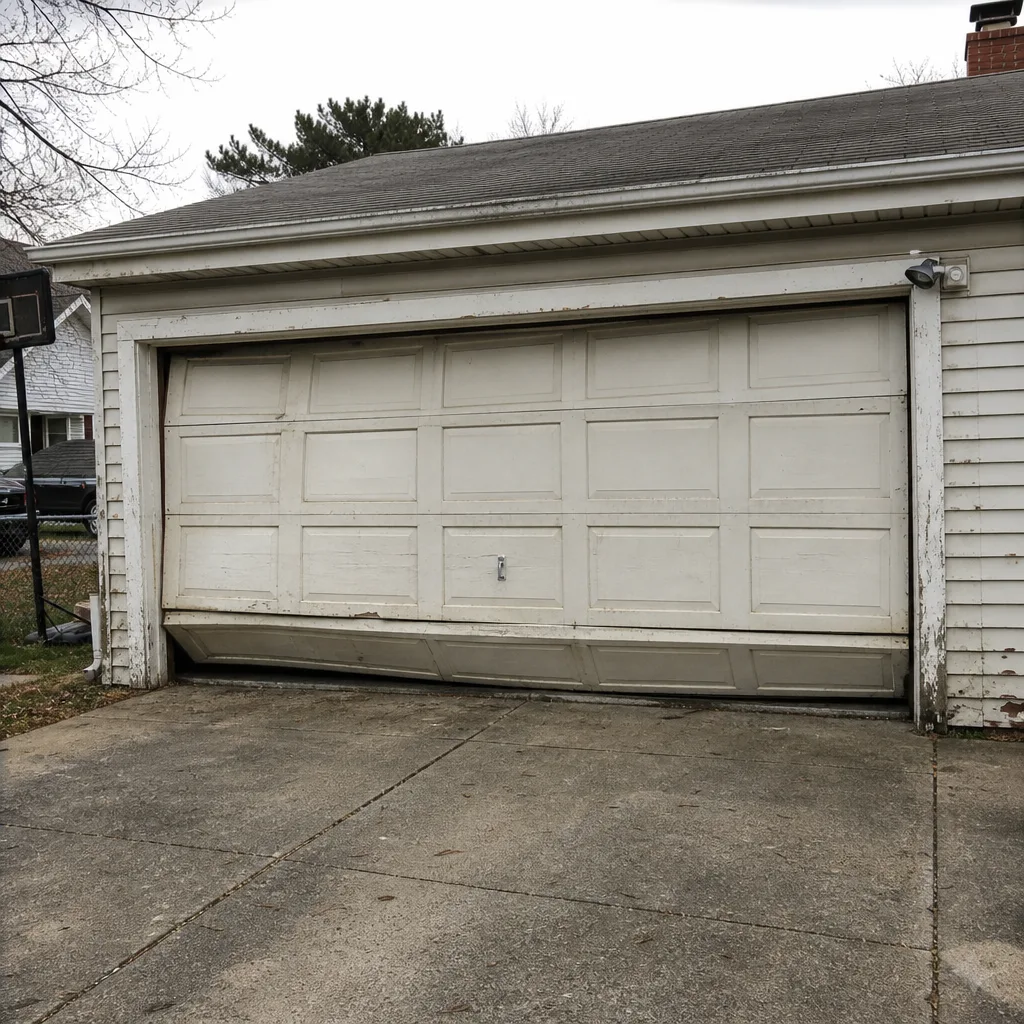 Before
 After
 Before
 After
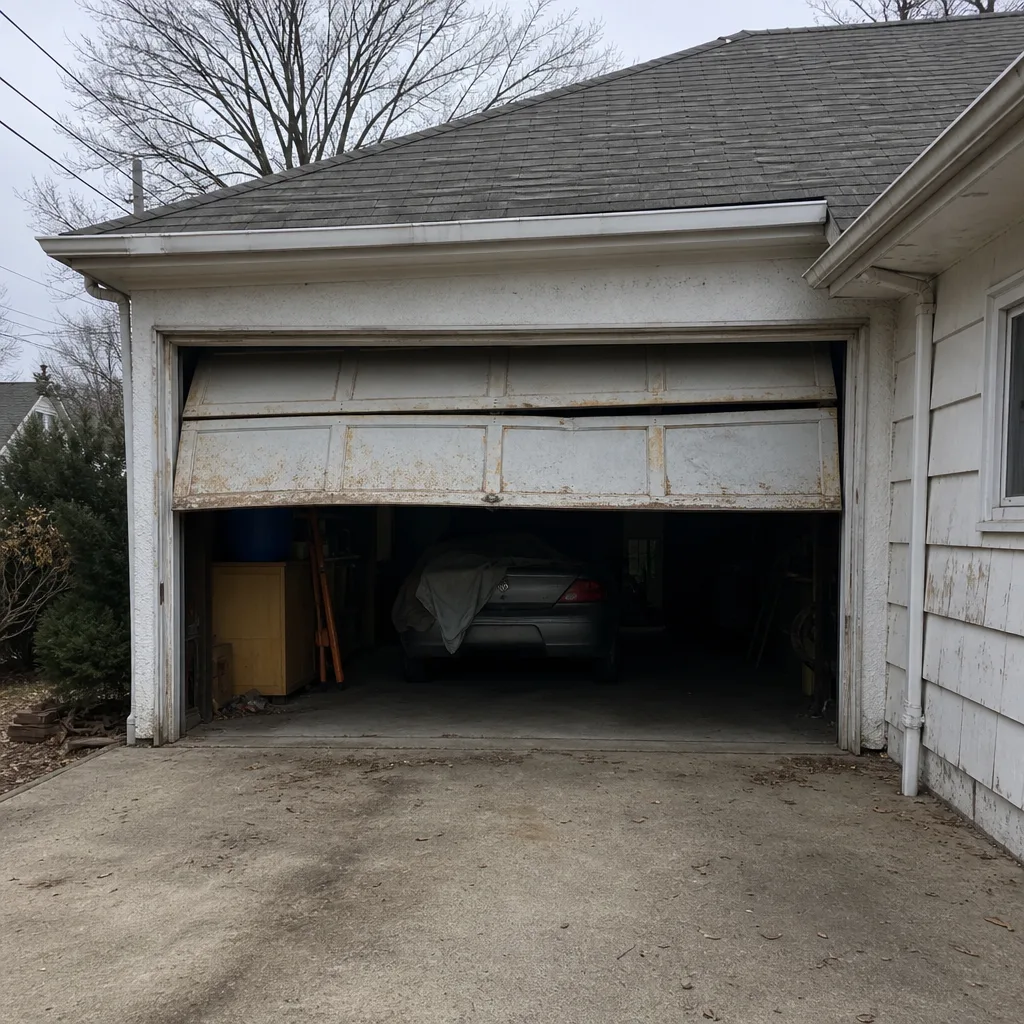 Before
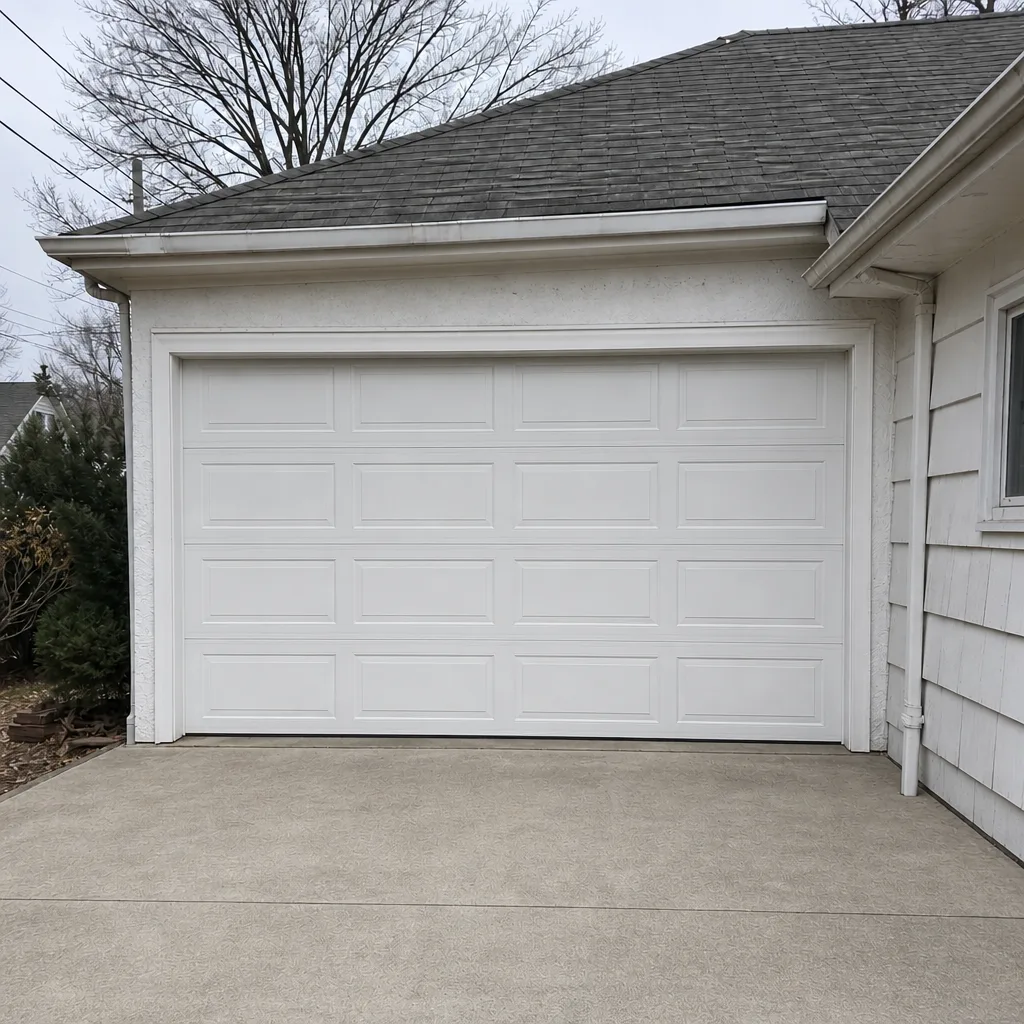 After
When to Call a Professional
Call a professional when a spring is broken or looks worn, when the door is too heavy to lift safely, when a track is bent or a door has jumped its rollers, when the opener runs but won’t move the door, or when a door won’t close and secures the house. Spring work in particular is the job to hand off; high tension makes it dangerous, and a trained technician is the right answer. For installation, call before your door fails so there’s time to measure and order the right fit. Corona Garage Door Repair Pros offers free estimates in Corona – call (855) 658-4170 for a written price. Our technicians have up to 10 years of experience, and we can work with the brand already in your garage.
Frequently Asked Questions
An insulated steel door in a traditional raised-panel style sizing to your actual opening is the most practical choice for most Corona homes. Steel handles the humidity and the real winter well, and the traditional panel fits a dense Queens block without raising HOA or co-op objections. The exact build depends on whether your garage is attached and how tight the opening is. Call (855) 658-4170 for a free estimate.
Because summer humidity around Flushing Meadows sits heavy over this part of Queens, and moisture on bare steel springs drives rust. A galvanized coating and regular lubrication slow it down. Rust weakens a spring under load, which is why spring inspection matters here more than in a dry climate.
Spring repair in Corona typically costs around $180 to $340 for one spring, and a matched pair replaced together runs about twice that. The written estimate you approve before work starts sets the final price, so there’s no surprise invoice after. Call (855) 658-4170 for an exact quote – estimates are free.
Emergency service is genuinely available for a door that won’t close and leaves the house insecure. Same-day repair covers many urgent situations during the day, and we can work with the time you have. Call (855) 658-4170 and we’ll sort out the fastest path.
Yes, if it’s measured first. Narrow rowhouse lots often have tight single-car openings, so the rough opening is measured precisely before anything is ordered. Installation is measured, ordered, and scheduled rather than same-day, because a door sized to your frame is the whole point. Call (855) 658-4170 for a free measure and written price.
The local professionals we connect you with are licensed and insured as their state requires, and they’re vetted before any job. We’re the multi-brand specialist for the equipment in your garage, not a general handyman service. Call (855) 658-4170 with any questions before booking.
The Bottom Line
Corona isn’t a suburb, and its garage doors shouldn’t be chosen like one. Dense blocks mean tighter sizing and clearance planning. Queens humidity makes spring material and care matter more. Attached garages make insulation and air sealing about protecting your home, and the right R-value follows a real NYC winter, not a national average. Panel style should fit the block and any board rules. And spring repair is the one job to always hand off. Get the fit, the material, and the insulation right for your Corona home and the door lasts, opens cleanly, and suits the street. Get those wrong and you’ll be paying for the correction later.
Whatever’s in your garage – from opener to panel – we work on the brand you already have. For Corona Garage Door Repair Pros and the full range of repair, spring, opener, and installation work, call (855) 658-4170 for a free estimate.
Written by the team at Corona Garage Door Repair Pros.