Last updated November 21, 2026
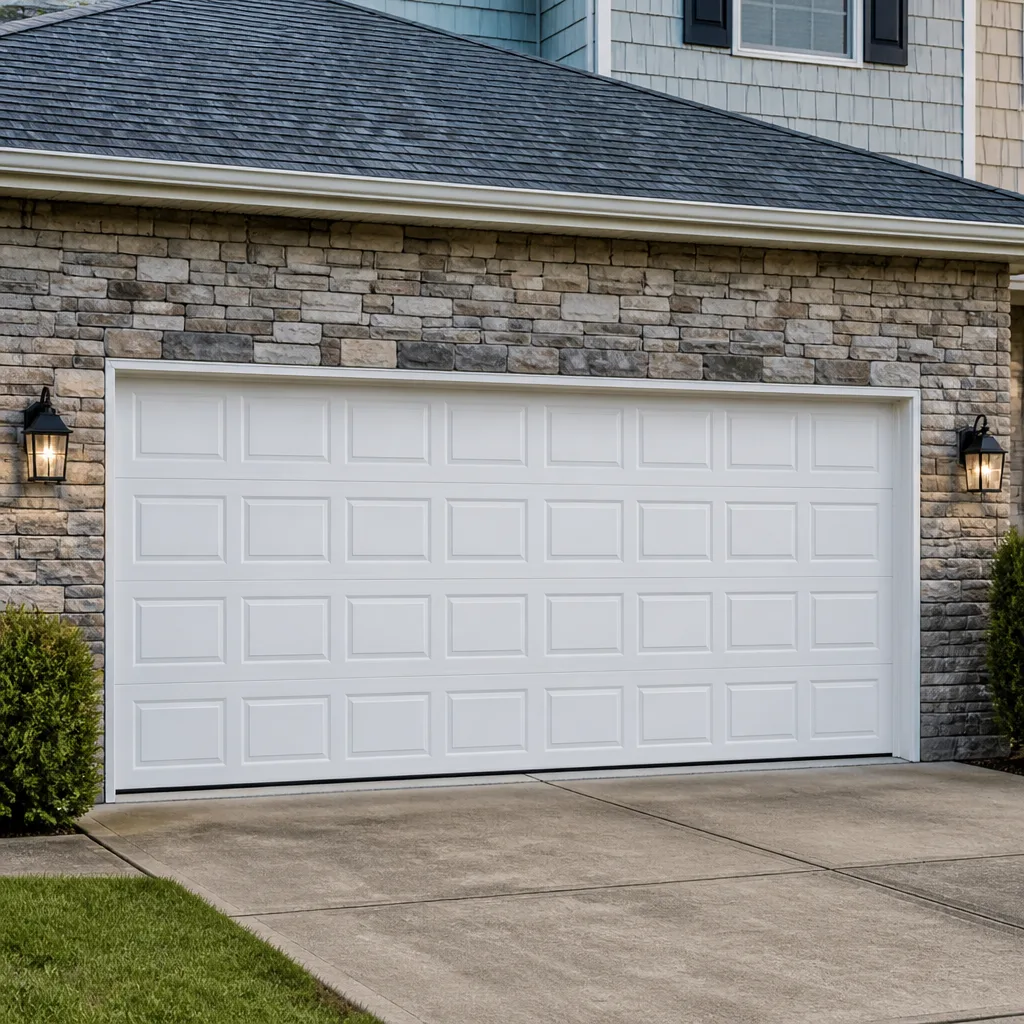 Raised-panel steel
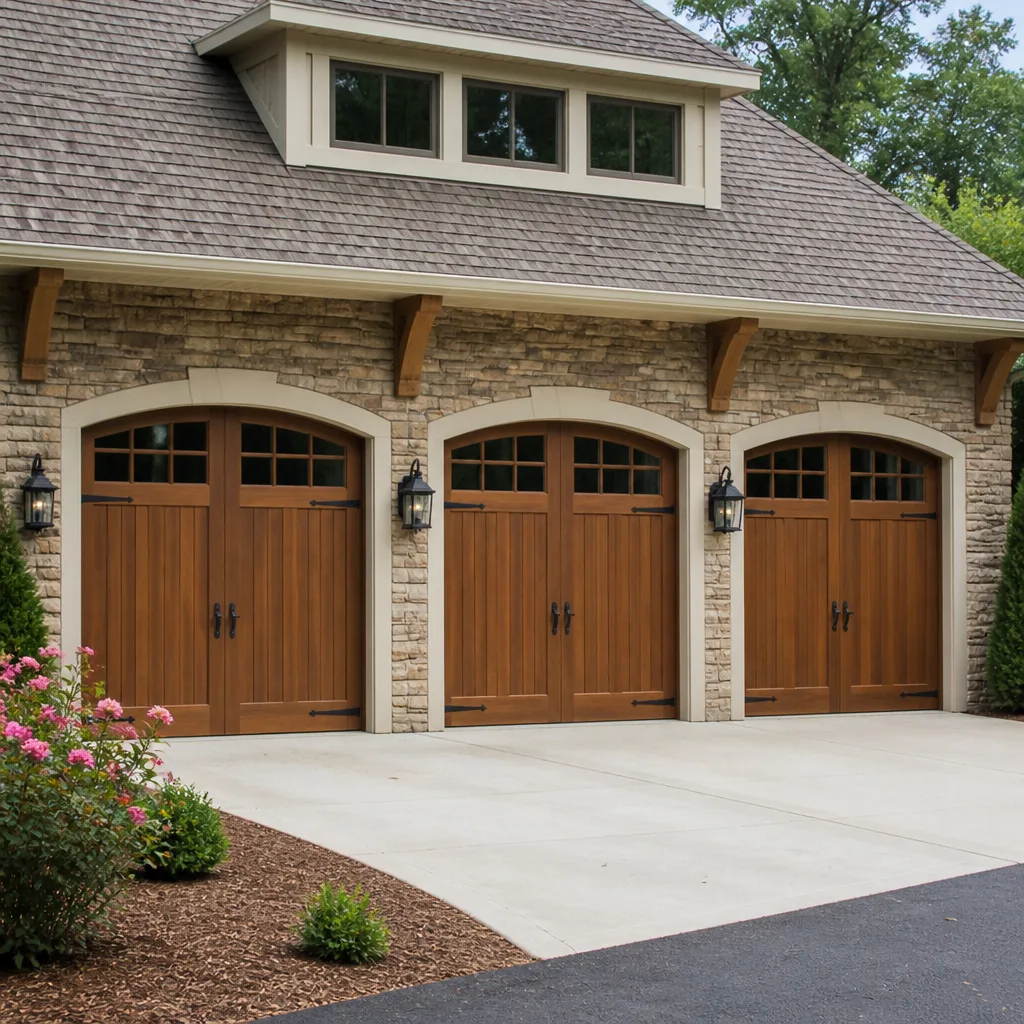 Carriage house
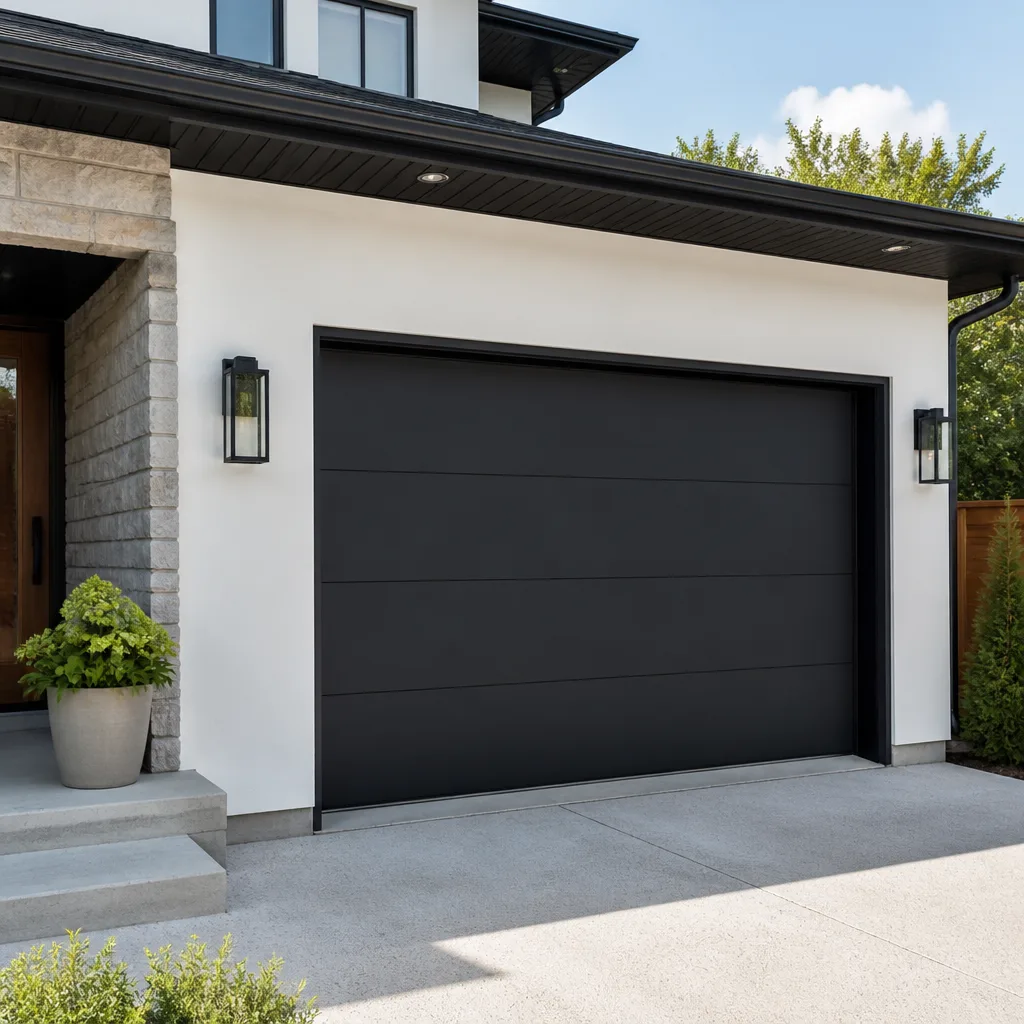 Modern flush
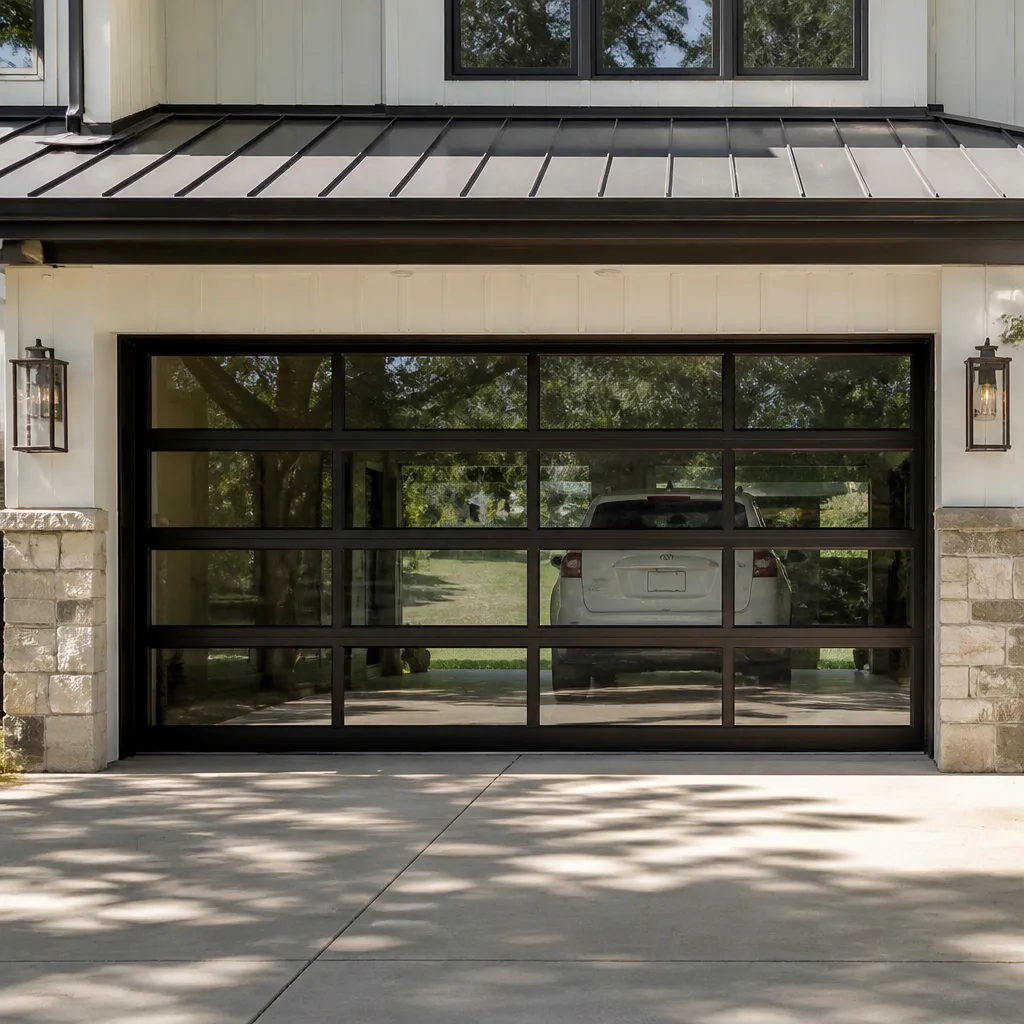 Full-view glass
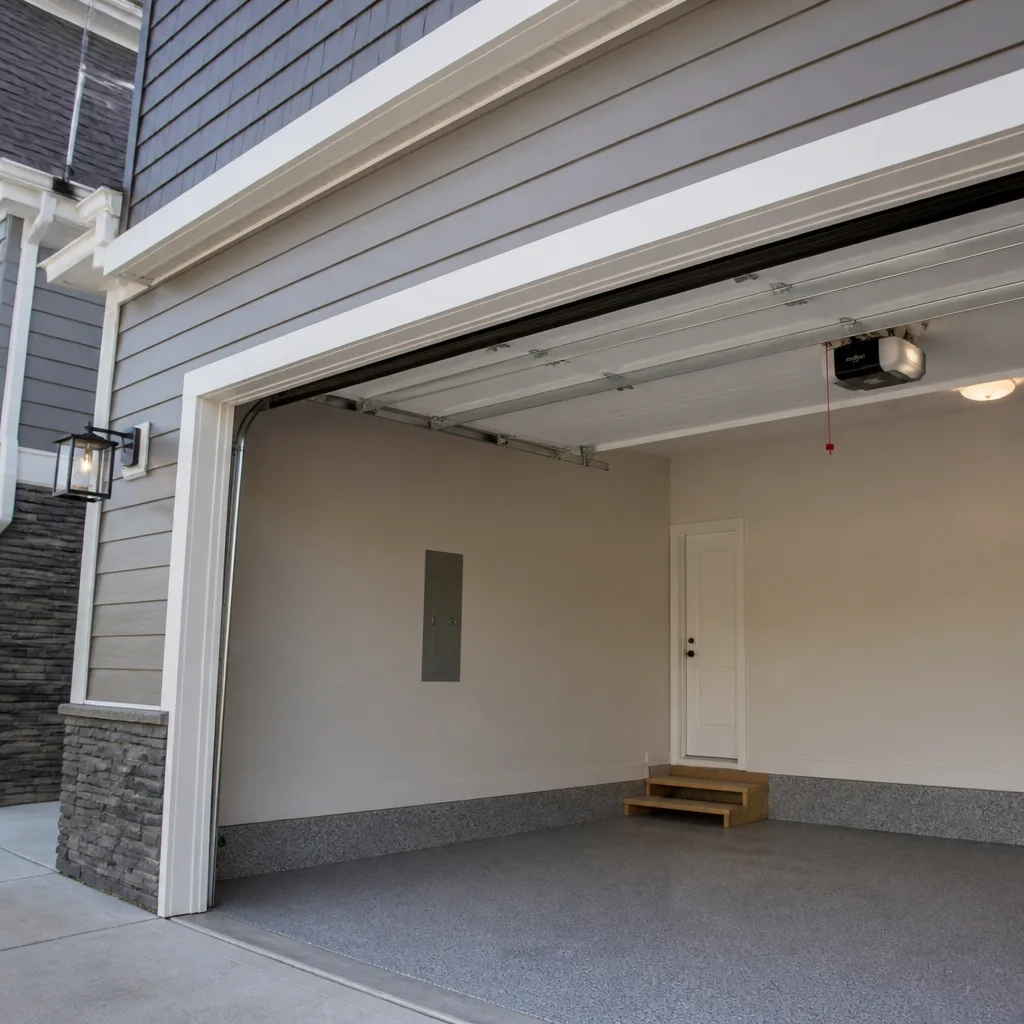 LiftMaster openers
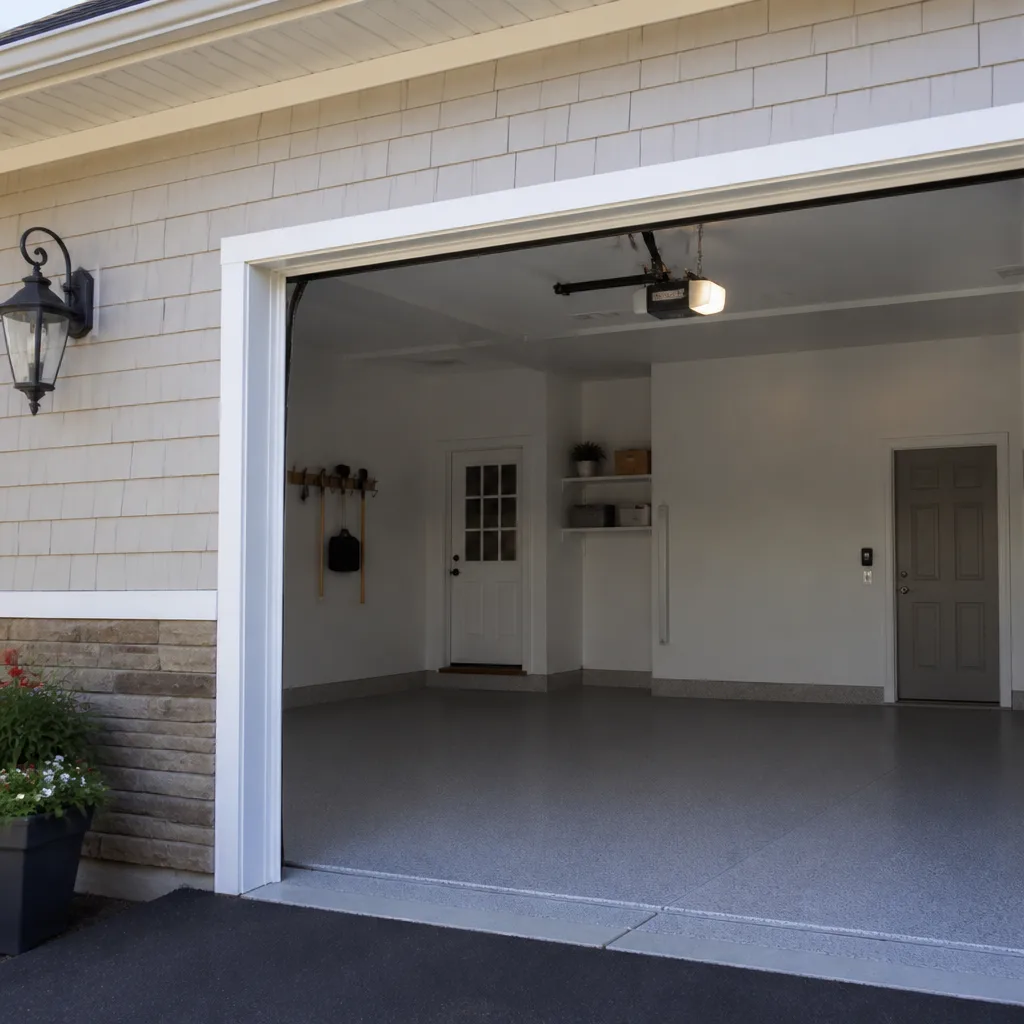 Chamberlain openers
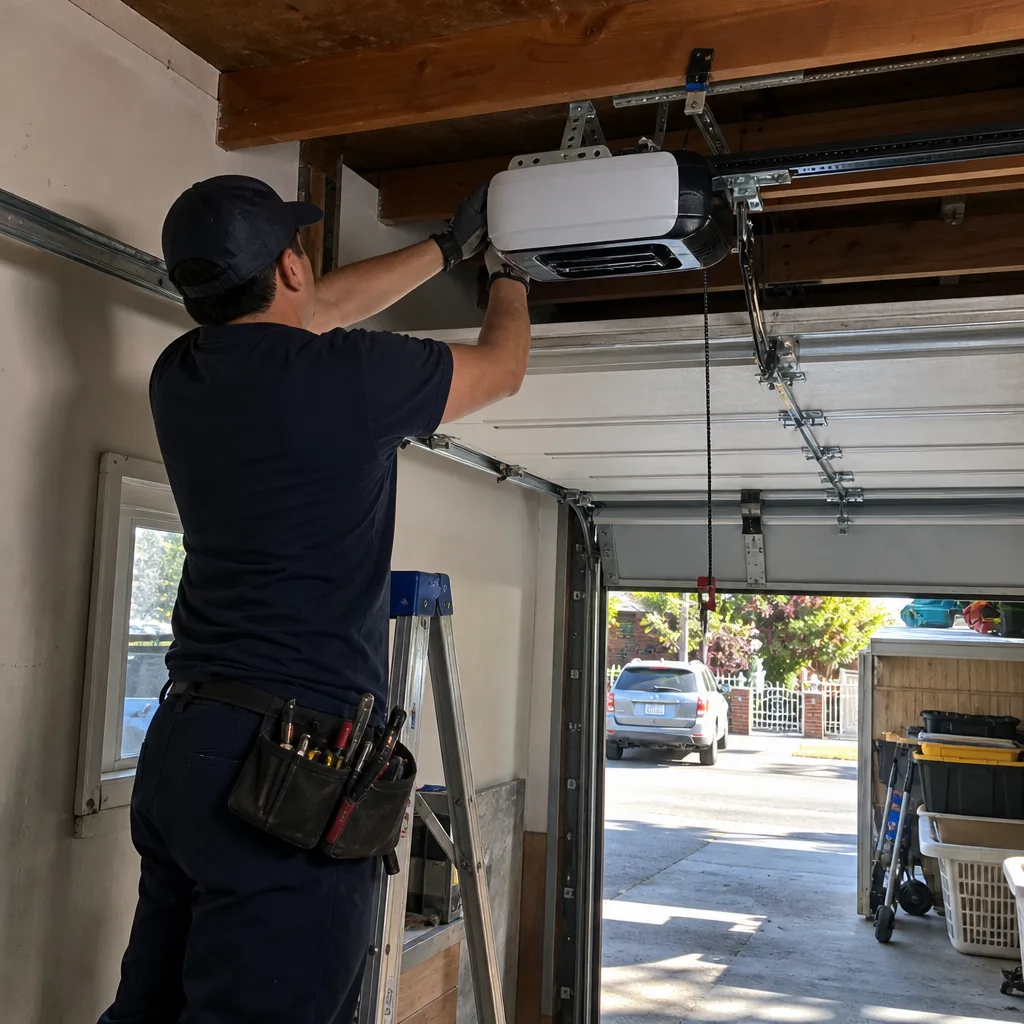
Full 25-point door and opener safety check with every visit - springs, cables, rollers, tracks, and your LiftMaster or Chamberlain opener included
You get a price before we start. It does not change when the pro arrives.
Get your free estimateGarage Door Warning Signs: A Corona Homeowner’s Reference Guide
The grinding noise your garage door made for three weeks before the spring snapped wasn’t random. It was a specific mechanical signal with a specific, inexpensive fix – and by the time the door came down, that window had closed. This is the part of garage door ownership most homeowners get wrong: they wait for the door to stop working, then call for an emergency repair. The early signals matter more than the obvious ones. In this reference, we’ll walk through the sounds, sights, and movement patterns that tell you what’s failing inside a Corona garage door before it turns into a Saturday-night callout. You’ll learn which warnings are safe to watch and which need a technician today.
Quick Answer
Most garage door failures announce themselves 2 to 4 weeks before the door stops working. The reliable early signals are grinding or squealing from the springs and rollers, jerky or uneven travel, a door that reverses before closing, and opener fault codes or blinking lights. In Corona, a heavy spring loaded a little farther each morning plus a door that runs fine open but catches on the way down usually means the spring, cable, or track is about to fail – call for a repair estimate before the emergency happens.
Styles & brands we work with
- Raised-panel steel
- Carriage house
- Modern flush
- Full-view glass
- LiftMaster openers
- Chamberlain openers
Table of Contents
- The 30-Day Window: Why Early Warnings Matter
- Sound Diagnostic: What Each Noise Tells You
- Visual Warning Signs You Can Spot Without Tools
- Reading the Door’s Movement Pattern
- Monitor vs. Same-Day: Which Warnings Are Urgent
- Opener Warning Signs and Fault Codes
- What Corona Weather and Homes Do to Garage Doors
- Typical Repair Costs Around Corona
The 30-Day Window: Why Early Warnings Matter
Garage doors fail on a curve, not a cliff. A worn spring doesn’t snap suddenly in most cases – it coils slightly after thousands of cycles, loses a small percentage of its lifting force, and starts forcing the opener to work harder each trip. That’s a two-to-four-week slide from “noisy door” to “door won’t open.” The same is true for cables, rollers, and hinges. What looks like a sudden failure is almost always the last day of a slow decline.
The reason early warnings are cheap and late failures are expensive comes down to what gets damaged along the way. A failing roller flexes the track. A hard-working opener board overheats. A door that lands unevenly on one side forces the hinge to shear. If you fix the noise in week one, you pay for a roller set or a tune-up. If you wait, you pay for the track, the hinges, and possibly a new opener too. In our experience across Corona, the most expensive spring repairs we see are the ones where the homeowner heard the grinding for a month first and let the door land on the opener arm.
The good news is that this window is generous. You don’t need a mechanic’s eye to catch most signals. You need to know what to listen for and where to look – which is what this guide is built around. If you want to compress the timeline and just get a technician to look at it, garage door repair in Corona is a reasonable next step, but reading through the sections below will help you describe exactly what you’re hearing when you call.
Sound Diagnostic: What Each Noise Tells You
Sound is the most useful diagnostic channel a homeowner has, because the components inside a garage door each produce a distinct sound when they’re failing. Learning to separate them narrows the problem down before a technician arrives – and lets you flag the urgent ones by name.
Grinding
Grinding is metal-on-metal contact. On a torsion-spring door, a low grind that appears mid-travel is usually a dry or worn bearing plate, torsion tube bushing, or drum. On an extension-spring door, grinding paired with a slight hang at the same height each cycle means the spring is dragging on its rod. Do not ignore grinding for more than a week; it spreads to the drum and the cable.
Rattling
Rattling is a fastener or roller problem. Loose hinges, a hinge screw backed out of the panel, or a roller with a worn stem will rattle at a specific speed and then fade as the door slows. Rattling alone is usually not urgent, but it accelerates wear on the panel holes and the roller pocket. A rattle that becomes a bang when the door hits the open position is the point to call.
Squealing
A high squeal that appears only at the start of travel is almost always a dry roller stem or a hinge knuckle that needs lubricant. If a short-lived squeal turns into a squeal that runs the length of the track, the rollers are failing and need replacement. Squealing is the cheapest of the four sounds to address, which is why we recommend tracking it early – it usually resolves with a roller and hinge service rather than a spring.
Thumping
Thumping – a heavy, repetitive knock – points at the spring balance rather than the hardware. If the door thumps once as it starts or once as it stops, the spring system is lifting or lowering unevenly. A torsion spring that has lost coil tension or a broken extension spring on one side produces exactly this. A thumping door is a monitor-for-24-hours warning at most; if it persists across two days, call.
- Grinding: bearing plate, drum, torsion tube, or spring rod – most urgent sound.
- Rattling: roller stems, hinge screws, panel fasteners – usually safe to book a non-emergency visit.
- Squealing: dry roller or hinge – cheap and quick to fix, easy to delay too long.
- Thumping: spring imbalance or one broken spring on a pair – get on the schedule.
Visual Warning Signs You Can Spot Without Tools
You don’t need a ladder to catch most garage door problems – the important warning signs are visible from the driveway. Walk the door once a month and look for these. Each one is specific enough to know what’s failing.
- A gap between coils on one side of the torsion spring. If the spring above the door has an opening between two coils while the rest is tight, the spring has cracked and will fail completely within days. Do not operate the door – call.
- Frayed or coiled cable around the bottom corner. A cable that’s starting to sprout loose strands near the bottom bracket is one cycle away from snapping. Stop using the door.
- A vertical gap between the door and the frame when closed. If one bottom corner sits higher than the other, the door is unbalanced or the track is off. This is a monitor-for-a-day sign on a manual door and a call-today sign on an opener door.
- Bent or kinked track sections. Even a small dent in the vertical or horizontal track will wear the rollers two to three times faster. Look along the track at eye level where the door turns.
- Curled or split weather seal at the bottom. In a Corona summer, the rubber strip hardens and can tear clean off, letting water and critters under the door. Cheap to replace if you catch it, a door-panel problem if you don’t.
- Rust or brown streaks below the hinges. This is dried lubricant mixed with metal dust – a sign the hinge is worn through its finish and starting to bind.
- Sagging panel lines. Stand back ten feet. If the horizontal lines between panels aren’t parallel when the door is up, a hinge has stretched and the panel has started to hang.
Any of the first four items on that list is a same-day concern. The bottom three are safe to monitor, but should be addressed with the next service rather than allowed to compound. If you can’t tell which category applies to what you’re seeing, Corona Garage Door Repair Pros can talk you through it over the phone before you decide to book.
Reading the Door’s Movement Pattern
How the door travels – not how it sounds – is the most underused diagnostic signal a homeowner has. The distance, speed, and evenness of the door’s motion tell you which component in the system is failing. Before you call for repair, watch the door through two full open/close cycles and note what you see. Here’s how the pattern narrows the fault down.
- Jerky at the same point every cycle. Track or roller. Locate the height where the door stutters and look at the roller at that panel. If the roller looks clean, check the track for a dent or a joint that has pulled apart.
- Slow and labored the whole way. Spring balance or opener force. On a manual door, lift it halfway by hand – it should feel light. If it’s heavy, the spring is losing tension. On an opener door, the opener is compensating for a spring and is on borrowed time.
- Starts smooth, binds in the last third going up. Usually the horizontal track, a worn pulley, or a failing torsion spring as the door approaches the top of travel. Note this one for the technician – it’s a spring-family problem.
- Uneven at the bottom. One side hits first or the door tilts while descending. This is cable or drum. It’s also the most dangerous pattern because the door can come off its track. Stop using it.
- Reverses within a few inches of closing. Safety sensor, track obstruction, or a failing opener travel limit. Check the safety eye and the manual close force before assuming the door is the problem.
- Fine open, catches on the way down. The most common pattern in Corona. Usually a spring that has started to break, or a bearing plate that binds under load. This is where the 30-day window is typically the shortest.
Write down the pattern – even as a one-line note on your phone – before you call. It gives the technician a huge head start and, in most cases, means the visit turns into a fix on the first trip rather than a diagnosis visit followed by a parts order.
Monitor vs. Same-Day: Which Warnings Are Urgent
Not every warning sign needs the same response. The reason matters here: the fast-response warnings are the ones that can turn into a security problem, a full door replacement, or a genuine injury risk within hours. Slower warnings can be booked onto the next available appointment without risking the door.
Here’s how we categorize them:
Call the same day
- Any visible gap or crack in a torsion spring, or a visibly broken extension spring.
- Frayed, kinked, or wound-up cable at the bottom bracket.
- A door that has come off its track, or hangs unevenly at the bottom.
- A door that won’t close fully, leaving the garage open to the street.
- An opener that has jammed with the door in the up position and won’t bring it down.
- Any grinding sound paired with a visible wear mark on the torsion tube or drum.
Book within a week
- Rattling or squealing that appears only at the start of travel.
- A door that’s slightly slow on cold mornings in Corona but normal by midday.
- A weather seal that’s torn, curling, or missing pieces.
- An opener that hesitates for a second before moving.
Monitor and address at next service
- A roller that has started to squeal on a single panel.
- Loose hinge screws that tighten back down with a screwdriver.
- Surface rust on hinges.
- Faint rattles that don’t affect travel.
The dividing line is whether the door can still be safely operated. Anything that touches the springs or cables – even a “small” fray or a single crack – tips into the same-day category because the failure mode is violent, not gentle. If you’re not sure which side of that line your door is on, call us and describe what you see. We’ll tell you honestly whether it can wait until tomorrow or needs to be handled today. For a door that’s stuck open or won’t close, our team offers emergency garage door service for exactly this situation.
Opener Warning Signs and Fault Codes
Openers fail more gracefully than springs, but they fail earlier if you miss the signs. Since we work on all eight of the most common residential brands – LiftMaster, Chamberlain, Genie, Clopay, Amarr, Wayne Dalton, Craftsman, and Raynor – we see the same tells across them. Here’s what to watch for.
Physical signs on any opener
- Straining at the start of a cycle. If the opener hums before the door moves, the motor is doing too much work – usually a spring that’s lost tension or a door that’s out of balance.
- Faint burning smell from the motor housing. A failing capacitor or an overheating control board. Stop using the opener and book an opener repair visit; continued use can cost the whole unit.
- Chain or belt slap against the rail. Wear in the drive system, or a rail that has loosened at its mounting point.
- Remote range shrinking week over week. Usually the logic board antenna or the battery in the remote – swap the remote battery first.
- Lights stay on after the door stops. On many LiftMaster and Chamberlain units, that’s a signal from the board that a safety sensor input is being lost.
Fault code basics
LiftMaster and Chamberlain units often blink the LED near the learn button in a repeating count pattern – one blink, pause, one blink means a sensor obstruction; a longer count means a logic or travel-limit fault. Genie units typically use a small code on the motor head cover or a flashing arrow sequence on the wall console – the meaning depends on the model, so the manual is the reference. Craftsman units usually flash the main light to indicate an obstruction or a limit switch issue. Raynor openers often report through the wall control unless the unit is one of the newer smart models with an app diagnostic. Rather than guess at the code, note the pattern, count the blinks, and tell us the model on the call. That’s usually faster than reaching for a manual. If your garage door opener repair needs parts, knowing the exact model number from the motor label is the single biggest time saver.
What Corona Weather and Homes Do to Garage Doors
Corona’s summer heat and the daily swing between warm afternoons and cool nights are harder on garage door components than homeowners expect. The result is that certain warning signs appear earlier and more often here than in a milder climate. Understanding those local patterns helps you read your door’s signals accurately.
Heat affects lubrication first. Grease thins on the torsion tube, rollers, and hinges during hot months, so grinding and squealing crop up faster here than the same components in a cooler climate. If you’re only lubricating once a year, do it every six months. The other hot-weather wear point is the bottom weather seal. Rubber hardens quickly under Corona sun and can crack or tear within a season, which is why we see more water intrusion and panel-bottom rot in Corona than in cities to the west.
Cool nights bring a subtler effect: the door’s travel changes by a few millimeters between morning and afternoon as metal expands and contracts. That’s normal. But if you notice the door runs smoothly in the morning and catches only on hot afternoons, the spring is likely losing tension – the warmer metal is masking the issue. Watch the door at both ends of the day before you decide a repair can wait.
The homes themselves matter too. Corona has a wide mix of housing – from older tracks in the western neighborhoods to newer builds with heavier insulated doors. Insulated doors put more load on the springs, which means spring failure arrives a little earlier on those doors than on uninsulated ones. If your door was upgraded to insulated panels without a spring upgrade, watch for the door running slow and the opener straining – a warning sign specific to this kind of setup. When you’re ready for a full replacement instead of a repair, our team handles garage door installation and will spec the spring to the door, not the other way around.
Typical Repair Costs Around Corona
Cost is usually the second question homeowners ask after “can you fix it today?” Here’s the honest range for each of the repairs this guide covers. These are typical estimates, not exact prices – the written estimate you get after the technician inspects the door is what sets the final price. A matched pair of springs is usually replaced together, so a pair costs about twice the single-spring figure.
| Repair | Typical range | Notes |
|---|---|---|
| Single torsion spring replacement | $180 – $340 | One spring; matched pairs are usually replaced together |
| Matched pair, torsion springs | Approximately 2× single-spring figure | Recommended when both springs are the same age |
| Extension spring replacement (per spring) | $140 – $260 | Older doors; usually paired |
| Roller and hinge service | $120 – $260 | Rattles, squeals, and slow travel |
| Track adjustment or replacement | $150 – $400 | Severe bends often require new track |
| Cable replacement | $150 – $320 | Frayed or kinked cable – same-day category |
| Opener repair (control board, capacitor, travel limit) | $150 – $400 | Model dependent; parts availability varies by brand |
| Weather seal replacement | $100 – $220 | Worth bundling with other service |
| Emergency callout | Standard service rate plus any emergency fee quoted upfront | Ask before the visit so there’s no surprise |
Two things to keep in mind. First, every number above is a quote we’ll agree in writing before any work starts, so you won’t see the invoice change once the door is apart. Second, the biggest cost driver isn’t the part itself, it’s whether you caught the symptom early. A grinding bearing caught in week one is a lubrication and bearing-plate job. The same grinding ignored for a month is often a spring, a drum, and a cable. Regulating your response time is the single biggest lever on your bill.
Common Mistakes to Avoid
- Assuming noise will go away on its own. It won’t. Every grinding or thumping sound in a garage door is a component that’s wearing faster, not slower. If a sound lasts more than a week, it’s failing.
- Greasing the torsion springs to stop the grind. Grease on the coils does nothing about internal wear and can attract grit that speeds failure. Lubricate the rollers and hinges; keep grease off the spring itself.
- Running the door repeatedly to “see if it’s still doing it.” Every cycle on a broken or near-broken spring is another chance for a hinge or panel to break too. Test once, then stop.
- Calling a general handyman for a spring. Spring systems store dangerous energy and need specific tools and technique. This is not a general-repair job. It’s a dedicated specialty for a reason, and our technicians have up to 10 years of experience with the repair.
- Ignoring the small rattles because “it still opens.” A rattle is cheap. The panel hole it widens is not. Corona doors work harder in the summer, and small rattles become track damage faster here than homeowners expect.
- Buying a new opener to fix a door problem. A slow, straining door is usually a spring issue, not an opener issue. Replacing the opener first is a common waste of money – diagnose the balance before the motor.
- Not noting the fault code before resetting the opener. A code that lights up once and disappears when you cut the breaker is information lost. Write it down or take a photo of the blinking pattern.
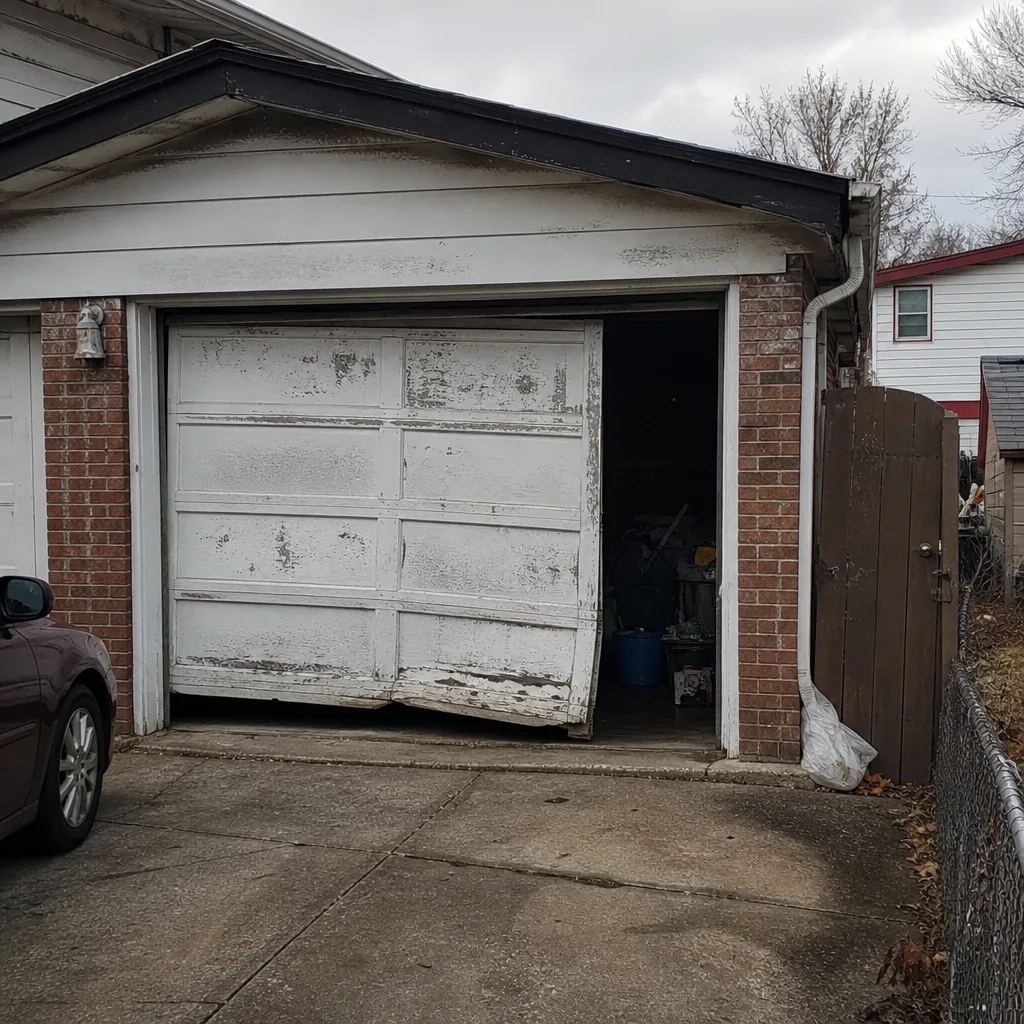
See the difference
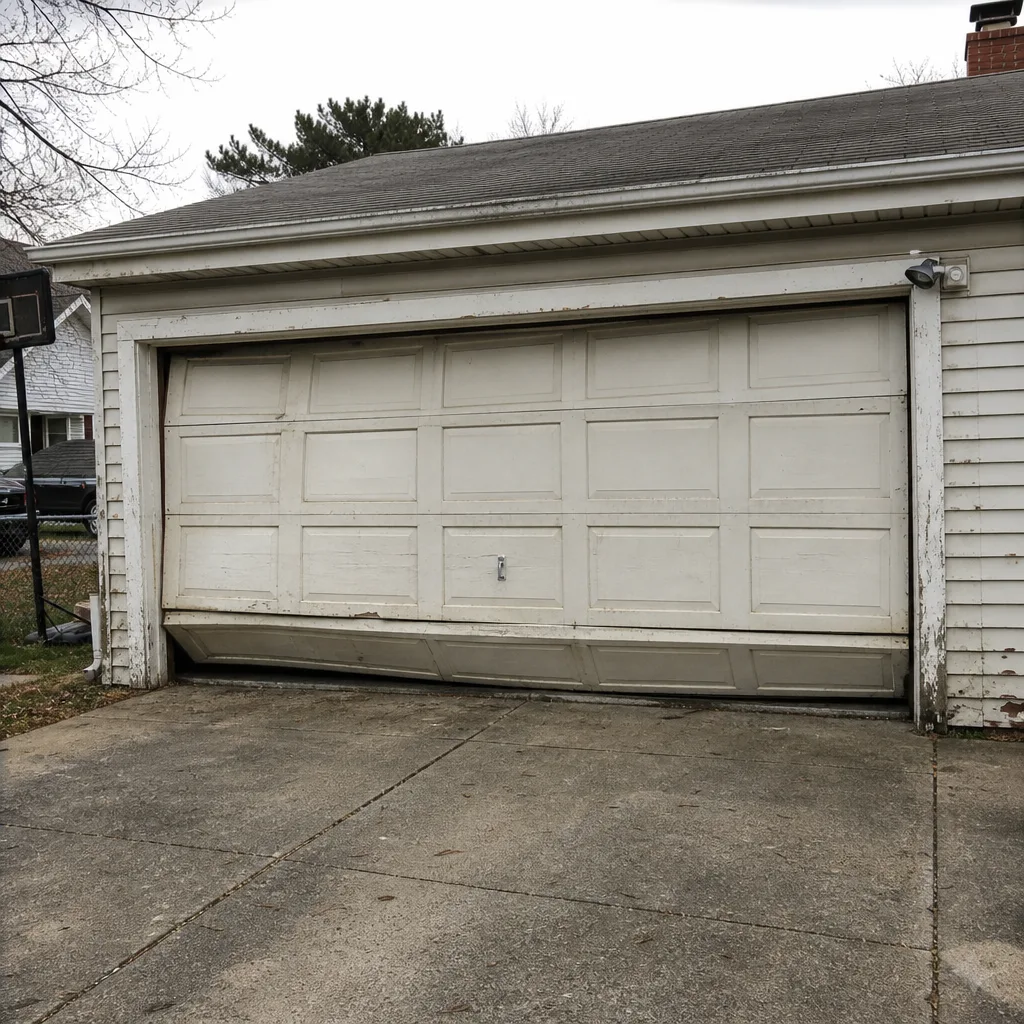 Before
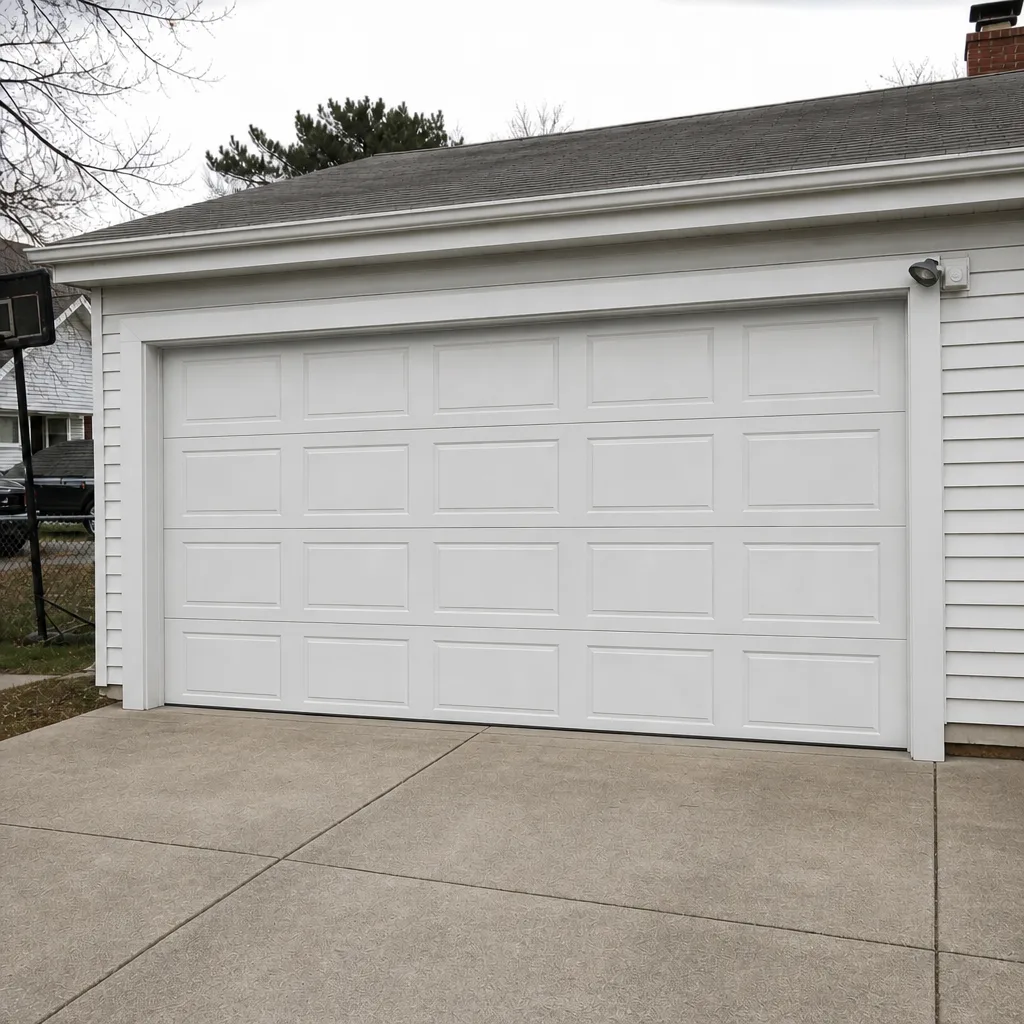 After
 Before
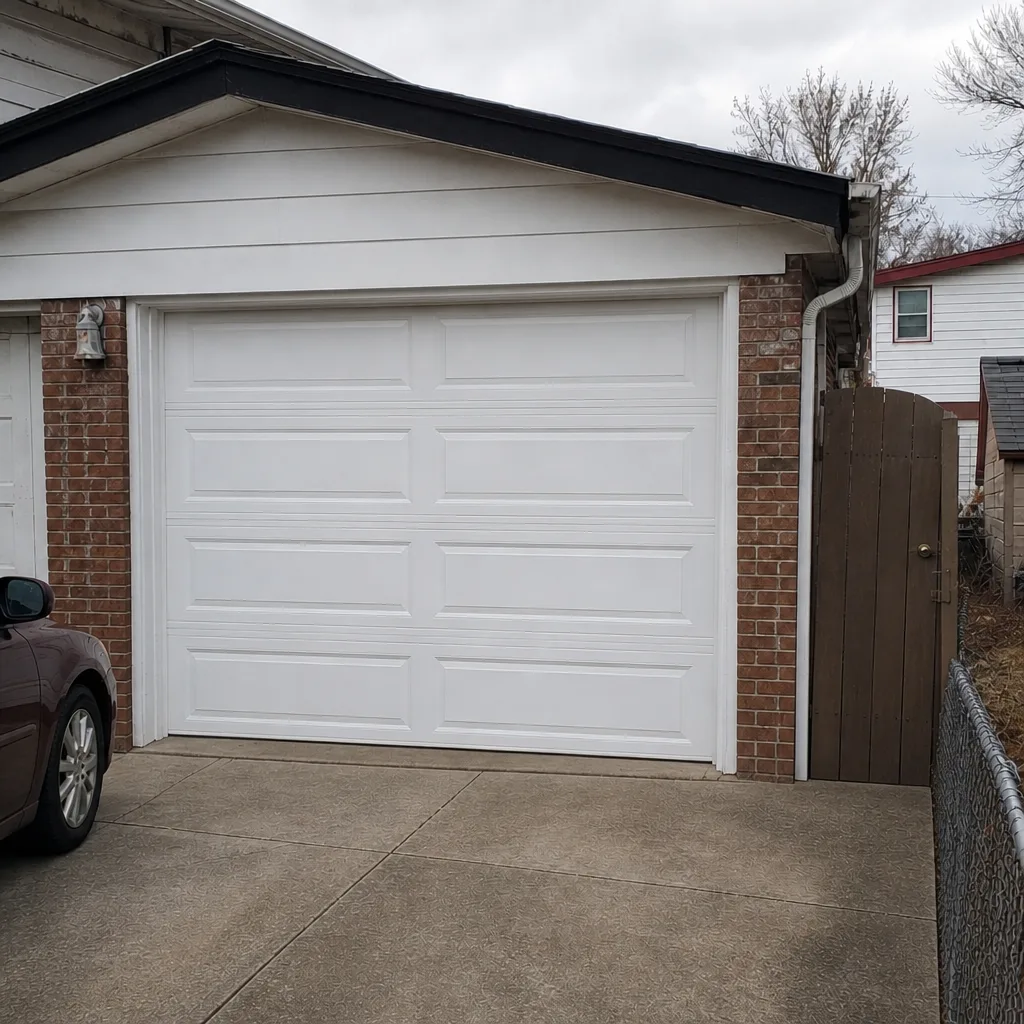 After
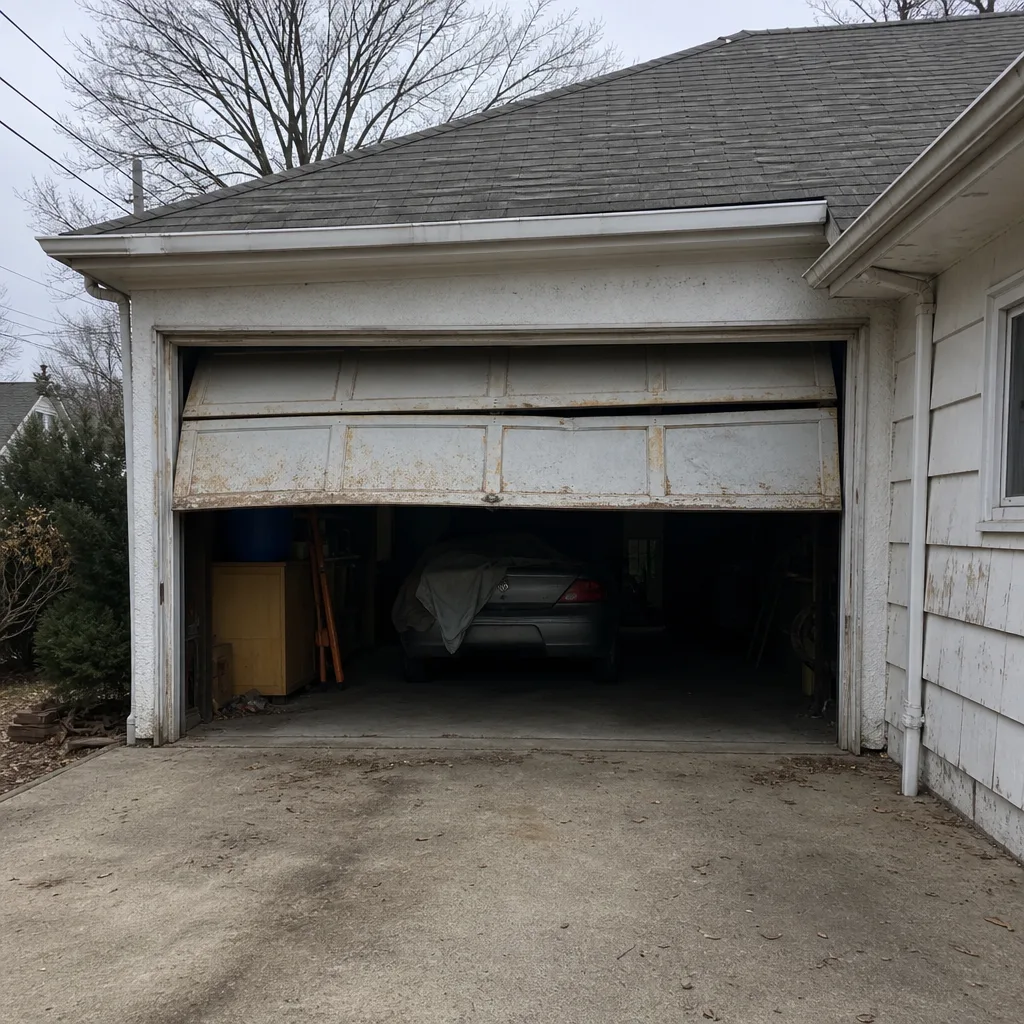 Before
 After
When to Call a Professional
Call a professional the moment you see or hear any of the following: a gap in the torsion spring coils, a frayed or kinked cable, the door hanging unevenly at the bottom, an opener that hums but won’t move the door, a door stuck open with the garage exposed, or a door that reverses without contact with anything. These are the signs where the failure mode is quick and, in the case of springs and cables, dangerous. Do not try to operate, prop, or “help” a door in these states to see if it clears – a spring under full load does not give a second chance. For everything else in this guide, you can safely wait for a scheduled visit, but don’t let it drift past a week. Corona Garage Door Repair Pros offers free estimates in Corona – call (855) 658-4170 and describe the sound or the pattern; we’ll tell you honestly whether it needs same-day attention or can be booked in.
Frequently Asked Questions
The first sign is usually a low grinding or thumping sound during travel, or a visible gap between coils on one side of the torsion spring. Both mean the spring is losing tension and will fail within days to weeks. If you see a gap in the coils, stop using the door and call (855) 658-4170 for an estimate – the repair is far less expensive than the damage a snapped spring can do.
Yes, briefly. A squeal that only appears at the start of travel is usually a dry roller or hinge and is safe to monitor for a few days. Have it lubricated and, if needed, have the roller replaced. Waiting weeks turns a cheap service into a hinge or panel repair, so it’s worth booking while the door is still smooth.
A blinking LED on a LiftMaster or Chamberlain opener is usually a diagnostic code – the number of blinks corresponds to a specific fault such as an obstruction, a travel-limit issue, or a sensor problem. Count the blinks and note the pattern before you reset. Call (855) 658-4170 with the pattern and the model number from the motor label and we’ll tell you what the opener is reporting.
Typical spring repair in Corona runs $180 – $340 for a single torsion spring; a matched pair is usually replaced together and costs about twice that. Extension springs run $140 – $260 each. The written estimate we give you before any work starts is the price you’ll pay – call (855) 658-4170 for a free estimate.
In most cases, yes – a door that won’t close is treated as an emergency because it leaves the garage open to the street. Call (855) 658-4170 and describe whether the door is stuck open, hanging uneven, or making a grinding noise. Emergency garage door service is a core part of what we do, not an add-on.
No. A garage door spring stores enough stored energy to cause serious injury if it releases unexpectedly, and the tools needed aren’t common hand tools. This is one of the most dangerous DIY repairs a homeowner can attempt, and it’s why spring repair is a dedicated specialty. Leave it to a trained technician – the risk to you is far greater than the cost of the repair.
The Bottom Line
Garage door failures almost always broadcast their intent two to four weeks in advance. Grinding, rattling, squealing, and thumping each point at a specific failing component. Visible gaps in springs, frayed cables, an uneven bottom edge, and a door that reverses without contact all mean the door needs a technician today, not next week. Movement patterns – jerky, slow, or uneven – narrow the fault down before the visit. In Corona, summer heat accelerates lubrication breakdown and weather-seal failure, so watch both closely. Fix the warning signs while they’re cheap, and you’ll avoid the emergency callout entirely. Our team is available to look at any of these signs with a free estimate.
Call Corona Garage Door Repair Pros at (855) 658-4170 for a free estimate. We work on the brand already in your garage – from spring repair to opener diagnostics to a complete new door – and every price is quoted and agreed before any work starts.
Written by the team at Corona Garage Door Repair Pros.